
Shoulder pain can be frustrating at any time of day, but it often feels much worse at night. Many people can manage their discomfort while working, exercising, or completing household tasks, only to find that the pain becomes significantly more noticeable the moment they lie down to sleep.
Night-time shoulder pain can make it difficult to fall asleep, wake you several times throughout the night, and leave you feeling tired and uncomfortable the next morning. Over time, poor sleep can affect your energy levels, mood, work performance, and overall quality of life.
Although sleeping position can sometimes contribute to shoulder discomfort, persistent night pain often indicates an underlying condition that deserves professional assessment.
At CN Physiotherapy, we help patients throughout Ottawa, Orléans, Fallingbrook, Navan, Blackburn Hamlet, Beacon Hill, Cumberland, Nepean, and surrounding communities identify the cause of their shoulder pain and develop personalized treatment plans to restore comfortable movement.
Why Does Shoulder Pain Feel Worse at Night?
There are several reasons why shoulder pain may become more noticeable after you go to bed.
During the day, your muscles are active, your attention is focused on work or daily activities, and your body position changes frequently.
At night:
- The shoulder remains in one position for longer periods.
- Pressure may increase on sensitive tissues.
- Muscles become less active.
- The nervous system is more aware of pain without daytime distractions.
- Certain sleeping positions may compress injured structures.
For some people, simply lying on the affected shoulder creates direct pressure on painful tendons or bursae. Others experience discomfort even when lying on the opposite side because the unsupported arm pulls on irritated tissues.
Night pain does not always indicate a serious injury, but it is an important symptom that should not be ignored if it continues.
Common Causes of Night-Time Shoulder Pain
Several different shoulder conditions can become more uncomfortable during the night.
1. Rotator Cuff Tendinopathy
The rotator cuff is made up of four muscles and their tendons that help stabilize and move the shoulder.
Rotator cuff tendinopathy is one of the most common reasons adults experience shoulder pain.
Symptoms often include:
- Pain when lifting your arm
- Pain reaching overhead
- Difficulty putting on a jacket
- Weakness
- Night pain
- Pain when lying on the affected shoulder
Repeated lifting, sports, home renovations, or gradual age-related tendon changes may all contribute.
Night pain is especially common because lying on the shoulder increases pressure on the irritated tendon.
2. Shoulder Bursitis
A bursa is a small fluid-filled sac that reduces friction between tissues.
When the bursa becomes irritated, inflammation can make the shoulder sensitive during movement and while lying down.
Common symptoms include:
- Pain on the outside of the shoulder
- Pain reaching overhead
- Tenderness
- Night discomfort
- Difficulty sleeping on one side
Bursitis frequently occurs alongside rotator cuff problems rather than by itself.
3. Frozen Shoulder (Adhesive Capsulitis)
Frozen shoulder develops when the shoulder capsule gradually becomes stiff and tight.
This condition often progresses through stages.
Early symptoms commonly include:
- Severe night pain
- Increasing stiffness
- Difficulty reaching overhead
- Trouble fastening a bra
- Difficulty reaching behind your back
- Limited range of motion
As stiffness increases, pain may gradually decrease, but shoulder movement becomes significantly restricted.
Frozen shoulder is more common in adults between 40 and 60 years of age and is also associated with diabetes.
4. Shoulder Impingement
Shoulder impingement occurs when tissues within the shoulder become compressed during certain movements.
Although the term “impingement” is used less frequently than in the past, many people still experience pain caused by irritation of structures beneath the acromion.
Symptoms often include:
- Pain lifting the arm
- Pain reaching into cupboards
- Difficulty washing your hair
- Pain lowering the arm
- Night discomfort
Poor shoulder mechanics, muscle weakness, and tendon irritation may all contribute.
5. Arthritis
Arthritis of the shoulder joint may cause:
- Deep aching pain
- Morning stiffness
- Clicking
- Reduced movement
- Night pain
The discomfort often becomes worse after periods of inactivity, including sleeping.
6. Neck Problems That Refer Into the Shoulder
Sometimes the shoulder is not actually the primary source of the pain.
Neck joints, muscles, or nerves may refer pain into the shoulder region.
You may notice:
- Neck stiffness
- Pain travelling into the arm
- Tingling
- Numbness
- Shoulder pain that changes with neck movement
A physiotherapy assessment helps determine whether the symptoms are originating from the shoulder, the neck, or both.
7. Rotator Cuff Tears
Some rotator cuff tears develop suddenly after a fall or heavy lift, while others occur gradually over time.
Symptoms may include:
- Significant weakness
- Difficulty lifting the arm
- Night pain
- Pain reaching overhead
- Difficulty performing daily activities
Not every rotator cuff tear requires surgery.
Many people improve with appropriate physiotherapy depending on the size of the tear, age, activity level, and overall health.
Why Sleeping Position Matters
The way you sleep can influence shoulder symptoms.
Sleeping directly on the painful shoulder places additional pressure on sensitive tissues.
Sleeping on your opposite side without supporting the affected arm may also increase discomfort because the shoulder hangs forward.
Many people find relief by:
- Hugging a pillow
- Supporting the painful arm with a pillow
- Sleeping on their back
- Keeping the shoulder in a relaxed position
Changing sleeping position alone, however, will not correct the underlying problem if an injury or movement dysfunction is present.
Signs You Should See a Physiotherapist
You should consider booking an assessment if:
- Night pain lasts more than two weeks.
- You cannot sleep comfortably.
- Pain wakes you every night.
- You have difficulty lifting your arm.
- Your shoulder feels weak.
- Daily activities become difficult.
- The pain continues despite rest.
- Your range of motion is decreasing.
Early treatment often helps prevent increasing stiffness and long-term weakness.
How Physiotherapy Can Help
Every shoulder problem is different.
Your physiotherapist will assess:
- Shoulder movement
- Muscle strength
- Rotator cuff function
- Neck mobility
- Shoulder blade movement
- Joint mobility
- Functional activities
- Posture
- Work demands
- Sports participation
This allows treatment to target the actual cause of your pain rather than simply treating the symptoms.
Therapeutic Exercise
Exercise forms the foundation of most shoulder rehabilitation programs.
Your exercises may focus on:
- Rotator cuff strengthening
- Shoulder blade stability
- Mobility
- Flexibility
- Posture
- Functional reaching
- Progressive strengthening
Exercises are progressed gradually as your symptoms improve.
Manual Therapy
Hands-on treatment may help reduce stiffness and improve shoulder movement.
Depending on your condition, manual therapy may include:
- Joint mobilizations
- Soft tissue techniques
- Stretching
- Movement guidance
Manual therapy is usually combined with active rehabilitation for the best long-term outcomes.
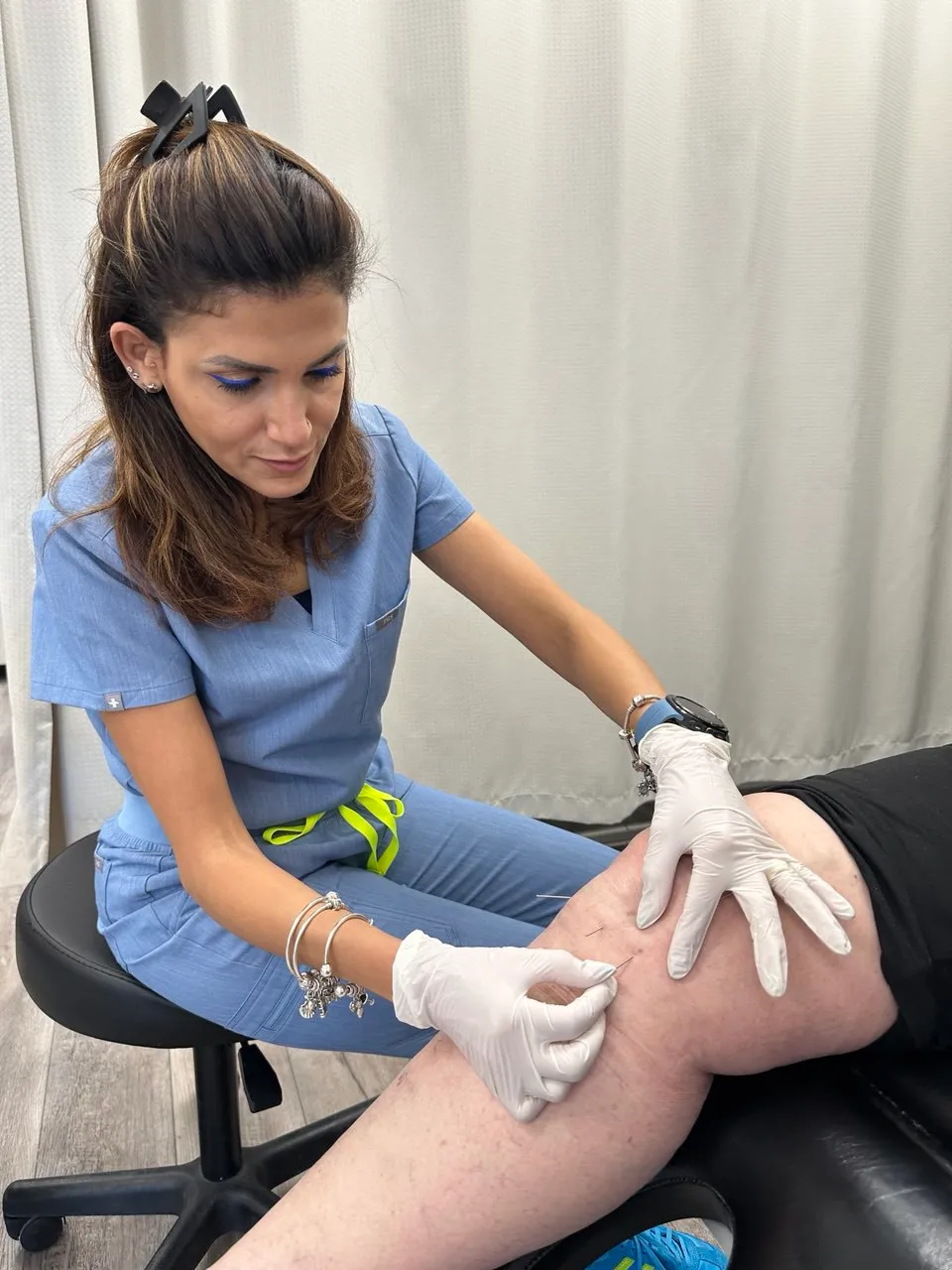
Dry Needling
If muscle trigger points are contributing to shoulder pain, dry needling may be included as part of your treatment program.
This may help reduce muscle tension and improve movement, particularly when combined with strengthening exercises.
Shockwave Therapy
Persistent tendon-related shoulder pain may respond well to Shockwave Therapy.
Shockwave Therapy delivers acoustic waves into injured tissue and may help stimulate healing while reducing chronic tendon pain.
It is commonly combined with therapeutic exercise rather than used as a stand-alone treatment.
Improving Your Sleep While Recovering
While rehabilitation is underway, several simple changes may improve comfort at night.
You may benefit from:
- Supporting your arm with a pillow
- Avoiding sleeping directly on the painful shoulder
- Performing gentle mobility exercises before bed
- Maintaining good daytime posture
- Following your prescribed exercise program consistently
If pain continues despite these adjustments, further assessment is recommended.
Can Shoulder Pain Go Away on Its Own?
Some mild shoulder problems improve with activity modification and time.
However, persistent symptoms, increasing weakness, and ongoing night pain often indicate that rehabilitation is needed.
Waiting several months before seeking treatment may allow stiffness and weakness to develop, making recovery more challenging.
When Is Shoulder Pain an Emergency?
Although most shoulder pain is not an emergency, seek immediate medical attention if you experience:
- Sudden inability to move the arm after trauma
- Obvious deformity
- Severe swelling
- Fever with shoulder redness and swelling
- Chest pain accompanied by shoulder pain
- Significant numbness or weakness
- Loss of circulation in the arm
These symptoms require prompt medical evaluation.
Frequently Asked Questions
Why is my shoulder only painful at night?
Night pain often occurs because sleeping positions place pressure on irritated tendons, bursae, or joints while the shoulder remains still for long periods.
Why can’t I sleep on my shoulder anymore?
Pain when lying on one side commonly occurs with rotator cuff tendinopathy, bursitis, or other shoulder conditions that become compressed during sleep.
Can physiotherapy help shoulder pain?
Yes. Physiotherapy may help improve strength, mobility, posture, movement quality, and shoulder function while reducing pain.
How long does shoulder pain take to recover?
Recovery depends on the diagnosis, severity of symptoms, and participation in rehabilitation. Some conditions improve within weeks, while others require several months.
Is frozen shoulder permanent?
No. Frozen shoulder usually improves over time, although recovery may take many months. Physiotherapy can help manage pain and restore movement.
Do I need an MRI?
Not always. Many shoulder conditions can be diagnosed through a thorough physical examination. Imaging may be recommended if a significant tear or another condition is suspected.
Should I stop exercising?
Not necessarily. Many people continue modified exercise programs while avoiding movements that significantly increase pain.
Can poor posture cause shoulder pain?
Poor posture alone is rarely the sole cause, but prolonged positions may contribute to shoulder overload in some individuals.
Does sleeping position really matter?
Yes. Supporting the arm and avoiding prolonged pressure on the painful shoulder often improves sleeping comfort.
When should I see a physiotherapist?
If shoulder pain persists, wakes you at night, limits your movement, or interferes with daily activities, it is a good time to schedule an assessment.
Don’t Let Shoulder Pain Steal Your Sleep
Night-time shoulder pain can affect every part of your life, from your energy levels at work to your ability to enjoy exercise, hobbies, and time with your family.
The sooner the cause is identified, the sooner an appropriate rehabilitation plan can begin.
At CN Physiotherapy, our experienced physiotherapists provide comprehensive assessments and personalized treatment plans for shoulder pain, rotator cuff injuries, frozen shoulder, bursitis, arthritis, and movement dysfunction.
We proudly serve patients throughout Ottawa, Orléans, Fallingbrook, Navan, Blackburn Hamlet, Beacon Hill, Cumberland, Nepean, and surrounding communities.
If shoulder pain is keeping you awake at night, contact CN Physiotherapy today to schedule your assessment and start moving—and sleeping—more comfortably.