As we get older, maintaining good balance becomes increasingly important for preserving independence, confidence, and overall quality of life. Many older adults notice subtle changes in their balance long before they experience a fall. Perhaps you feel less steady walking on uneven ground, hesitate when climbing stairs, or find yourself reaching for furniture as you move around your home.
While occasional unsteadiness may seem like a normal part of aging, balance problems should never simply be accepted. Many of the factors that contribute to falls can be improved through physiotherapy, strength training, balance exercises, and education.
Falls are one of the leading causes of injury among older adults, but many falls are preventable with the right assessment and intervention.
At CN Physiotherapy, we help older adults throughout Ottawa, Orléans, Fallingbrook, Navan, Blackburn Hamlet, Beacon Hill, Cumberland, Nepean, and surrounding communities improve balance, increase confidence, and reduce their risk of falling.
Why Does Balance Change As We Age?
Balance depends on several body systems working together.
Your ability to stay upright relies on:
- Vision
- Inner ear (vestibular system)
- Muscle strength
- Joint mobility
- Coordination
- Nerve function
- Reaction time
- Brain processing
As we age, natural changes may occur in each of these systems.
For example:
- Muscles gradually lose strength.
- Reaction times become slower.
- Vision may decline.
- Joint stiffness increases.
- Balance reactions become less efficient.
- Certain medications may cause dizziness.
When several of these factors occur together, the risk of falling increases.
The good news is that many of these changes respond well to targeted rehabilitation.
What Causes Balance Problems?
Balance difficulties are not always caused by aging alone.
Common causes include:
- Muscle weakness
- Arthritis
- Vestibular disorders
- Stroke
- Parkinson’s disease
- Diabetes
- Previous injuries
- Joint replacements
- Foot pain
- Poor vision
- Peripheral neuropathy
- Medication side effects
- Reduced physical activity
Some people experience dizziness, while others simply feel unsteady.
Identifying the underlying cause is one of the most important steps in choosing the appropriate treatment.
Signs You May Be At Risk Of Falling
Many people do not realize their balance has declined until after a fall occurs.
Warning signs include:
- Frequently tripping
- Holding onto walls or furniture
- Feeling unsteady when turning
- Difficulty walking on uneven ground
- Avoiding stairs
- Fear of falling
- Slower walking speed
- Difficulty getting out of a chair
- Feeling dizzy when standing
- Previous falls
Even one fall can reduce confidence and lead to avoiding activities that were once enjoyable.
Unfortunately, reduced activity often causes further muscle weakness, making future falls even more likely.
Why Falls Matter
Falls are more than just accidents.
They can lead to:
- Fractures
- Head injuries
- Loss of independence
- Hospitalization
- Reduced mobility
- Fear of movement
- Social isolation
- Loss of confidence
Many older adults begin limiting their activities after a fall because they worry it will happen again.
Physiotherapy aims to break this cycle by improving physical ability and rebuilding confidence.
How Physiotherapy Helps Improve Balance
Every balance assessment begins with understanding why you feel unsteady.
Your physiotherapist will evaluate:
- Walking pattern
- Balance
- Muscle strength
- Joint mobility
- Flexibility
- Reaction time
- Coordination
- Foot function
- Medical history
- Previous falls
- Home environment
- Functional activities
Rather than simply treating symptoms, physiotherapy focuses on identifying the factors contributing to poor balance.
Strength Training
Strong muscles play an essential role in preventing falls.
Weakness commonly develops in:
- Hips
- Quadriceps
- Calves
- Core muscles
- Ankles
Strengthening these areas improves stability while standing, walking, climbing stairs, and getting up from a chair.
Exercises are always tailored to your current abilities and progressed gradually.
Balance Exercises
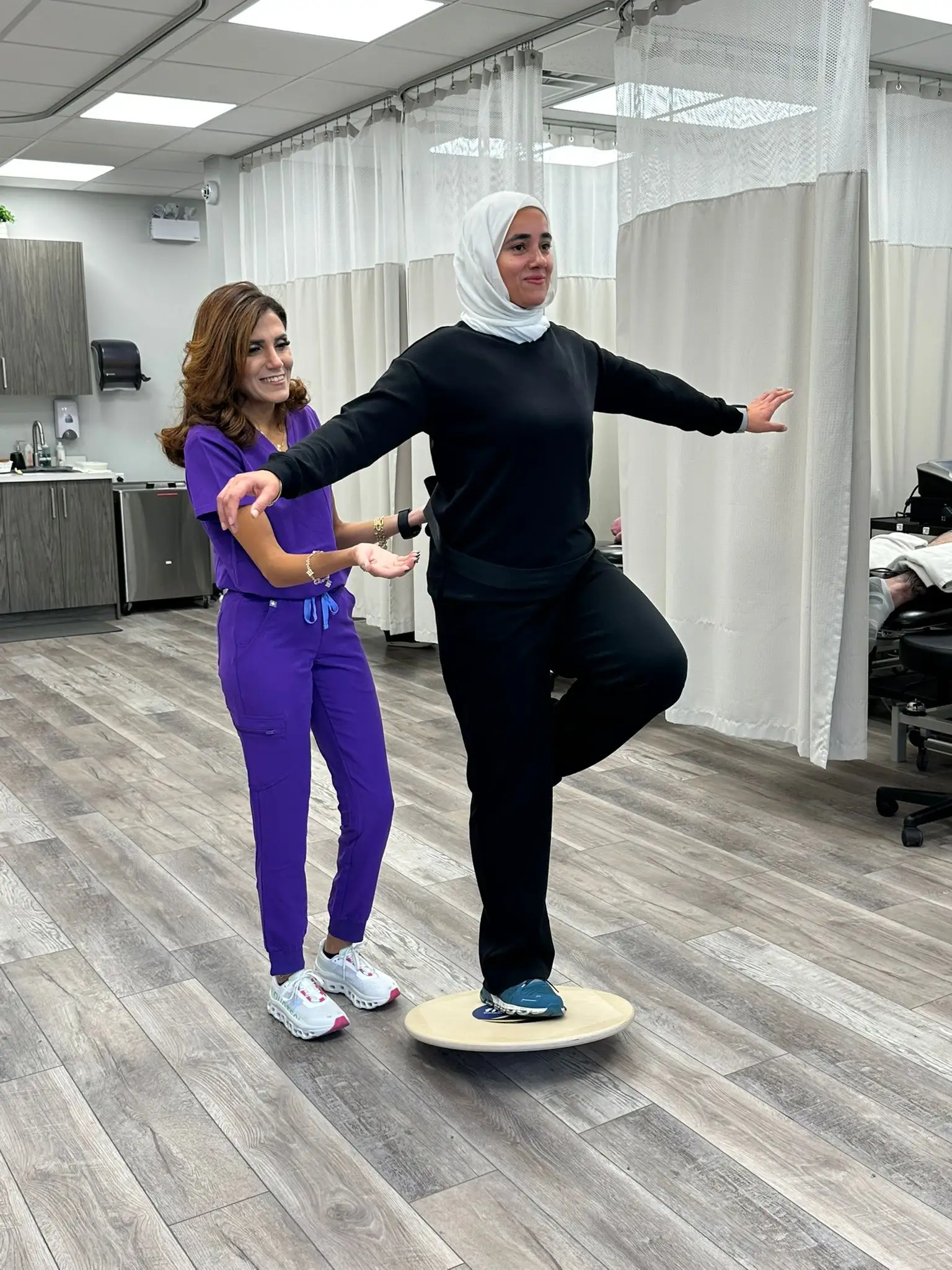
Balance improves through practice.
Depending on your needs, your program may include:
- Standing on one leg
- Tandem standing
- Weight shifting
- Heel-to-toe walking
- Stepping exercises
- Direction changes
- Obstacle navigation
- Reaching activities
As your confidence improves, exercises become gradually more challenging.
Walking Retraining
Walking patterns often change after an injury or fall.
Your physiotherapist may work on:
- Walking speed
- Step length
- Turning
- Uneven surfaces
- Stair climbing
- Outdoor walking
Improving walking mechanics helps reduce unnecessary strain while increasing confidence.
Vestibular Rehabilitation
Sometimes balance problems originate from the inner ear rather than the muscles or joints.
Vestibular rehabilitation may help people experiencing:
- Vertigo
- Dizziness
- Motion sensitivity
- Poor balance
- Visual instability
Treatment may include:
- Head movement exercises
- Eye movement exercises
- Balance retraining
- Walking exercises
- Specific repositioning manoeuvres for conditions such as BPPV
Many people are surprised how effectively vestibular physiotherapy can reduce dizziness.
Functional Training
Improving balance means more than standing on one leg.
Physiotherapy also focuses on everyday activities such as:
- Getting out of bed
- Rising from a chair
- Climbing stairs
- Carrying groceries
- Reaching overhead
- Walking outdoors
- Entering and exiting a vehicle
Exercises become increasingly specific to your lifestyle and goals.
The Importance Of Confidence
Fear of falling can sometimes become as limiting as balance problems themselves.
People who lose confidence often begin avoiding:
- Shopping
- Walking outside
- Visiting friends
- Community events
- Exercise classes
Reduced activity causes further weakness, creating a cycle that increases fall risk.
Physiotherapy helps restore confidence by providing safe, supervised practice and gradual progression.
Home Safety Tips To Reduce Falls
Simple home modifications can significantly reduce fall risk.
Consider:
- Removing loose rugs
- Improving lighting
- Installing grab bars
- Keeping walkways clear
- Using non-slip bath mats
- Wearing supportive footwear
- Keeping frequently used items within easy reach
- Cleaning up electrical cords
Small changes often make a significant difference.
Can Exercise Really Prevent Falls?
Yes.
Research consistently shows that exercise programs focusing on balance, strength, and functional movement can reduce fall risk in older adults.
Consistency is the key.
Even two or three sessions per week can improve:
- Strength
- Coordination
- Walking ability
- Confidence
- Endurance
- Balance
Your physiotherapist will recommend exercises appropriate for your current ability and medical history.
Who Can Benefit From Fall Prevention Physiotherapy?
Physiotherapy may help if you:
- Have fallen recently
- Feel unsteady
- Use a walking aid
- Have arthritis
- Have Parkinson’s disease
- Have had a stroke
- Experience dizziness
- Have osteoporosis
- Have difficulty walking
- Feel less confident outdoors
Early intervention often produces better outcomes than waiting until multiple falls have occurred.
Can Falls Be Completely Prevented?
No program can eliminate every fall.
However, improving strength, balance, coordination, and home safety can significantly reduce the likelihood of falling and help minimize injuries if a fall does occur.
When Should You Seek Medical Attention?
Although balance problems often respond well to physiotherapy, some symptoms require immediate medical assessment.
Seek urgent medical attention if you experience:
- Sudden loss of balance
- Difficulty speaking
- Facial drooping
- Sudden weakness
- Severe dizziness with neurological symptoms
- Loss of consciousness
- Chest pain
- Sudden vision changes
These symptoms may indicate a medical emergency.
Frequently Asked Questions
Is poor balance a normal part of aging?
Some changes occur with age, but significant balance problems should not simply be accepted. Many contributing factors can be improved through physiotherapy.
Can physiotherapy prevent falls?
Physiotherapy cannot guarantee that falls will never occur, but it can reduce fall risk by improving strength, balance, coordination, and confidence.
How long does balance rehabilitation take?
This depends on the cause of your balance problem, your overall health, and how consistently you perform your exercise program.
What if I’ve already fallen?
A previous fall is one of the strongest predictors of future falls. Early assessment can help identify why the fall occurred and reduce future risk.
Is it too late to improve my balance?
No. Adults of all ages can improve strength and balance with appropriately designed exercise programs.
Can physiotherapy help dizziness?
Yes. Vestibular physiotherapy may help certain causes of dizziness and vertigo, particularly those involving the inner ear.
Do I need a walker or cane?
Not everyone does. Your physiotherapist can assess whether an assistive device would improve your safety and mobility.
Can arthritis affect balance?
Yes. Pain, stiffness, and weakness associated with arthritis may reduce stability while walking or standing.
Will balance exercises be difficult?
Exercises are individualized and begin at a level appropriate for your current ability before progressing gradually.
How often should I perform balance exercises?
Most people benefit from performing their prescribed exercises several times each week, although recommendations vary depending on individual needs.
Stay Active, Stay Independent
Balance problems do not have to prevent you from enjoying an active and independent lifestyle.
Whether you have recently experienced a fall, notice increasing unsteadiness, or simply want to remain confident as you age, physiotherapy can help you improve your balance, build strength, and reduce your risk of falling.
At CN Physiotherapy, we provide comprehensive fall prevention programs, vestibular rehabilitation, strength training, gait assessment, and personalized physiotherapy for older adults throughout Ottawa, Orléans, Fallingbrook, Navan, Blackburn Hamlet, Beacon Hill, Cumberland, Nepean, and surrounding communities.
If balance concerns are affecting your confidence or limiting your daily activities, contact CN Physiotherapy today to schedule a comprehensive balance assessment and begin moving with greater safety, confidence, and independence.