By CN Physiotherapy Ottawa
Have you spotted a rounded bump at the back of your neck or upper back? You’re definitely not alone, and the good news is, you don’t have to put up with it. Commonly known as a Dowager’s Hump, this condition often stems from poor posture, too much screen time, and muscle imbalances. At CN Physiotherapy Clinic Ottawa, our skilled physiotherapists are dedicated to helping people of all ages reverse the Dowager’s Hump and restore proper posture—naturally and effectively.
Quick answer: A dowager’s hump (also called a neck hump) is a rounded bump at the base of the neck and top of the upper back. It is most often caused by long-term forward head posture and slouching, which strain the upper spine and let soft tissue build up over the area. In many people, a posture-related neck hump can be reduced with targeted exercises, stretching and physiotherapy. A hump caused by bone changes such as osteoporosis or structural kyphosis may not fully reverse, but treatment can still ease pain and improve posture.
What Is a Dowager’s Hump?
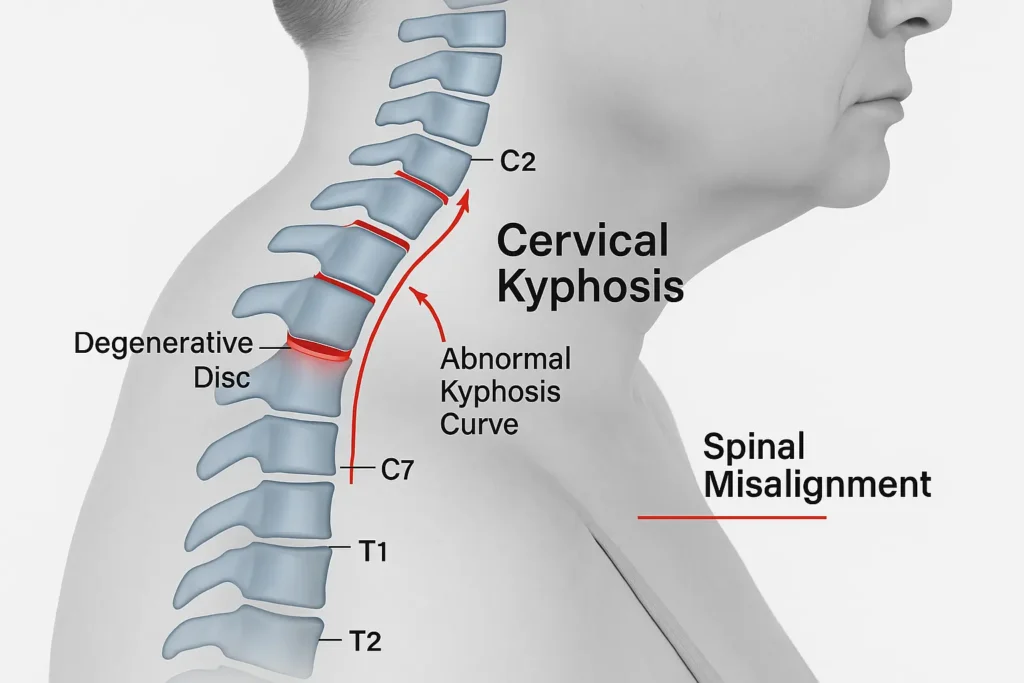
A Dowager’s Hump appears as a visible bump or curve at the upper back or base of the neck. While it may be associated with spinal conditions like kyphosis, most often it’s due to:
- Prolonged poor posture (slouching, forward head posture)
- Excessive screen time (also known as text neck)
- Weak upper back and neck muscles
- Tight chest and shoulder muscles
If left untreated, this condition can lead to chronic neck pain, stiffness, headaches, and even lowered self-esteem.
Symptoms Of Dowager’s Hump
Some of the Dowager’s Hump symptoms may include:
- Visible Hump: The most noticeable symptom is the rounded hump on the upper back, typically at the base of the neck or the upper thoracic spine.
- Neck and Shoulder Pain: Many individuals with Dowager’s Hump experience discomfort, stiffness, or pain in the neck and shoulder areas due to the increased strain on these muscles.
- Back Pain: Kyphosis can also cause back pain, particularly in the upper back region.
- Limited Mobility: Reduced flexibility and range of motion in the upper back can be a common symptom, making certain movements difficult.
- Muscle Weakness: The weakening of the muscles supporting the thoracic spine may lead to muscle imbalances and weakness.
- Headaches: Some individuals with Dowager’s Hump may experience chronic headaches, which can be attributed to the altered posture and increased stress on the neck and upper back.
How to get rid of a dowager’s hump
We suggest starting with the following exercises:
Chin tucks. To do a chin tuck, pull your chin straight back. This is good for the disks in your neck and strengthens your neck muscles. Do three sets of 10 daily.
Scapular squeezes. For these, squeeze your shoulder blades together, which helps improve your upper back muscles. Do three sets of 10 daily.
Doorway pectoral stretches. Stand in an open doorway, raising your arms like a goalpost with your palms forward. Place your palms on the door frame and step forward with one foot to feel the stretch across your chest. Hold for 20 to 30 seconds. Do two to three times daily.
How Our Ottawa Physiotherapists Can Help
At CN Physiotherapy Clinic Ottawa, we take a personalized approach to treating Dowager’s Hump. Our experienced physiotherapists assess your posture, identify root causes, and create a customized plan to help you restore spinal alignment and confidence.
1. Postural & Movement Assessment
We begin with a full posture and movement analysis to identify muscle imbalances, joint restrictions, and patterns contributing to the Dowager’s Hump.
2. Manual Therapy
Our physiotherapists use targeted hands-on techniques to release tension in tight muscles, improve joint mobility, and restore natural spinal alignment.
3. Corrective Strengthening
We guide you through exercises that strengthen your upper back, deep neck flexors, and shoulder stabilizers—key muscle groups that help correct forward head posture and support a healthy spine.
4. Stretching Tight Areas
Tight chest, shoulder, and neck muscles often pull the body into poor alignment. We teach specific, safe stretches to increase flexibility and promote upright posture.
5. Ergonomic & Postural Education
Our physiotherapy clinic in Ottawa provides valuable tips on improving your daily habits—whether at your desk, in the car, or at home. Simple changes to your environment and routine can make a lasting difference.
Dowager’s Hump: Frequently Asked Questions
What causes a hump on the back of the neck?
The most common cause is long-term forward head posture — for example from desk work, phones or slouching — which overloads the joints and muscles where the neck meets the upper back. Weak upper-back muscles, tight chest muscles, osteoporosis and age-related spinal changes (kyphosis) can also contribute. A soft, fatty lump that appears quickly can have other causes, such as certain medications or hormonal conditions, and should be checked by a doctor.
Can a dowager’s hump be reversed?
A posture-related dowager’s hump can often be reduced, sometimes significantly, with consistent strengthening, stretching and posture changes. If the hump is caused by bone changes such as compression fractures or structural kyphosis, it may not fully disappear, but physiotherapy can still reduce pain, improve mobility and help prevent it from getting worse.
Can a neck hump cause headaches?
Yes. The forward head posture that usually comes with a neck hump puts extra strain on the muscles and joints at the base of the skull, which can contribute to tension-type and neck-related (cervicogenic) headaches. Improving posture and neck strength often helps.
How long does it take to improve a neck hump?
It depends on the cause and how long it has been there. Many people notice less stiffness and pain within a few weeks of regular exercises, while visible posture changes usually take a few months of consistent work.
When should I see a doctor about a hump on my neck?
See a doctor if the lump is growing quickly, feels soft or fatty, is painful or red, or comes with other symptoms such as unexplained weight change, numbness or weakness in the arms, or a history of osteoporosis or fractures. A physiotherapist can also assess you and refer you if needed.
Want a personalized plan? Book a posture assessment at our Orléans – Orleanswood, Orléans – Fallingbrook or Ottawa – Carling clinic, or learn more about our neck pain physiotherapy.
Don’t Let Dowager’s Hump Hold You Back
You deserve to feel strong, stand tall, and move without pain. If you’re struggling with poor posture or a Dowager’s Hump, our team of dedicated physiotherapists at CN Physiotherapy Clinic Ottawa is here to help.
👉 Book your assessment today and take the first step toward better posture, improved mobility, and a healthier spine—with professional care you can trust.