
Hip pain while walking can be frustrating because walking is part of almost everything we do. It can affect work, errands, exercise, stairs, household tasks, and even simple daily routines like getting out of the car or crossing a parking lot. Some people feel pain in the front of the hip or groin. Others feel it on the outside of the hip, deep in the buttock, or down the thigh. The location and pattern of the pain can give important clues about what may be causing it.
For many people in Ottawa, hip pain develops gradually from repeated strain, weakness, stiffness, arthritis, injury, or changes in walking mechanics. Sometimes it starts after increasing activity, slipping, falling, sitting too much, or returning to exercise too quickly. While some hip discomfort improves with rest and gentle movement, pain that keeps returning or limits walking should not be ignored.
Physiotherapy can help identify why the hip hurts, improve strength and mobility, and guide a safe return to comfortable walking.
Why Hip Pain Can Show Up During Walking
The hip is a strong joint, but it also carries a lot of responsibility. Every step requires the hip to support body weight, absorb force, stabilize the pelvis, and coordinate with the lower back, knees, ankles, and feet. If one part of that system is not working well, the hip can become overloaded.
Walking can bring out hip pain because it repeatedly loads the joint and surrounding muscles. Even small issues can become noticeable when repeated over hundreds or thousands of steps.
Hip pain while walking may be linked to:
- Muscle weakness
- Joint stiffness
- Tendon irritation
- Arthritis
- Bursitis
- Lower back referral
- Hip impingement
- Poor walking mechanics
- Previous injury
- Overuse from increased activity
- Foot, ankle, or knee issues changing how you walk
The right treatment depends on the cause. That is why guessing or only stretching the painful area may not be enough.
Where You Feel Hip Pain Matters
Hip pain can appear in different areas, and the location can help point toward possible causes.
Pain in the groin or front of the hip may be related to the hip joint itself, hip flexor irritation, arthritis, or impingement.
Pain on the outside of the hip may be linked to tendon irritation, bursitis, weakness in the glute muscles, or pressure through the side of the hip.
Pain in the buttock may come from the hip, lower back, sacroiliac joint, or deep hip muscles.
Pain that travels down the leg may involve the lower back, nerve irritation, or changes in walking mechanics.
Pain near the thigh or knee can sometimes still be related to the hip. Hip problems do not always stay in one neat location.
Common Cause: Hip Osteoarthritis
Hip osteoarthritis is one common reason people experience hip pain while walking, especially as they get older. Arthritis can cause changes in the cartilage and joint surfaces, leading to stiffness, aching, and reduced range of motion.
Hip arthritis often causes pain in the groin, front of the thigh, buttock, or sometimes the knee. It may feel worse with walking, stairs, standing after sitting, or getting in and out of a car. Many people also notice stiffness in the morning or after sitting for a while.
Physiotherapy can help by improving hip mobility, strengthening the muscles around the hip, and helping you manage activity levels. While physiotherapy cannot reverse arthritis, it can often improve comfort, function, and walking tolerance.
Common Cause: Tendon Irritation Around the Hip
The muscles around the hip work hard during walking. The glute muscles, hip flexors, hamstrings, and smaller stabilizing muscles all help control each step. If these muscles or tendons become overloaded, pain can develop.
Tendon-related hip pain often builds gradually. It may feel worse after increasing walking distance, climbing hills, using stairs, standing on one leg, or sleeping on the painful side.
Physiotherapy may focus on progressive strengthening, load management, walking adjustments, and reducing irritation. Rest alone may calm symptoms temporarily, but the tendon often needs a gradual strengthening plan to tolerate activity again.
Common Cause: Greater Trochanteric Pain Syndrome
Pain on the outside of the hip is often related to greater trochanteric pain syndrome. This can involve irritation of the glute tendons, bursae, or soft tissues around the outer hip.
People with this type of pain may notice discomfort when walking, climbing stairs, lying on the affected side, standing on one leg, or getting up from a chair. The area may feel tender to touch.
This pain is sometimes called bursitis, but the issue is often more complex than simple inflammation. Physiotherapy can help by improving hip strength, reducing compression through the side of the hip, and building better movement control.
Common Cause: Hip Flexor Strain or Tightness
Pain in the front of the hip may come from the hip flexors, especially after increased activity, prolonged sitting, running, cycling, or repetitive lifting of the leg.
Hip flexor problems may cause discomfort when walking uphill, climbing stairs, getting out of a chair, or lifting the knee. Some people describe a pinching or pulling sensation at the front of the hip.
Physiotherapy can help determine whether the issue is mainly muscle irritation, joint stiffness, weakness, or movement coordination. Treatment may include mobility work, strengthening, posture education, and gradual return to activity.
Common Cause: Lower Back Referral
Not all hip pain starts in the hip. The lower back can refer pain into the hip, buttock, groin, or thigh. This can make it difficult to tell where the problem is coming from without an assessment.
Hip pain may be related to the lower back if it changes with back movement, sitting posture, bending, coughing, or prolonged standing. Tingling, numbness, burning, or pain travelling below the knee may also suggest nerve involvement.
A physiotherapist can assess both the hip and lower back to help identify the source of symptoms and guide treatment.
Common Cause: Hip Impingement
Hip impingement can cause a pinching feeling in the front of the hip, especially with bending, squatting, sitting low, or rotating the hip. Some people feel it during walking, especially if their stride or hip motion is limited.
This condition can involve reduced space or irritation in the hip joint during certain movements. Physiotherapy may help by improving strength, movement control, hip mobility, and activity modification. The goal is to reduce irritation and help the hip move more comfortably.
Hip Pain After a Fall or Injury
If hip pain starts after a fall, twist, accident, or direct impact, it should be taken seriously. Some injuries are minor, such as bruising or muscle strain, but others may need medical assessment.
Seek medical care quickly if you have severe pain, cannot bear weight, notice major swelling or bruising, have deformity, or feel pain that is worsening instead of improving.
Once serious injury is ruled out, physiotherapy can help restore movement, strength, balance, and walking confidence.
How Walking Mechanics Affect Hip Pain
The way you walk can influence hip pain. Sometimes pain causes a limp, and the limp then adds more stress to the hip, back, knee, or foot. Other times, weakness or stiffness changes walking mechanics before pain even starts.
A physiotherapist may assess:
- Step length
- Hip movement
- Pelvic control
- Foot position
- Knee alignment
- Balance
- Walking speed
- Limping patterns
- Stair movement
Improving walking mechanics can reduce strain and help the hip tolerate activity better.
How Physiotherapy Can Help
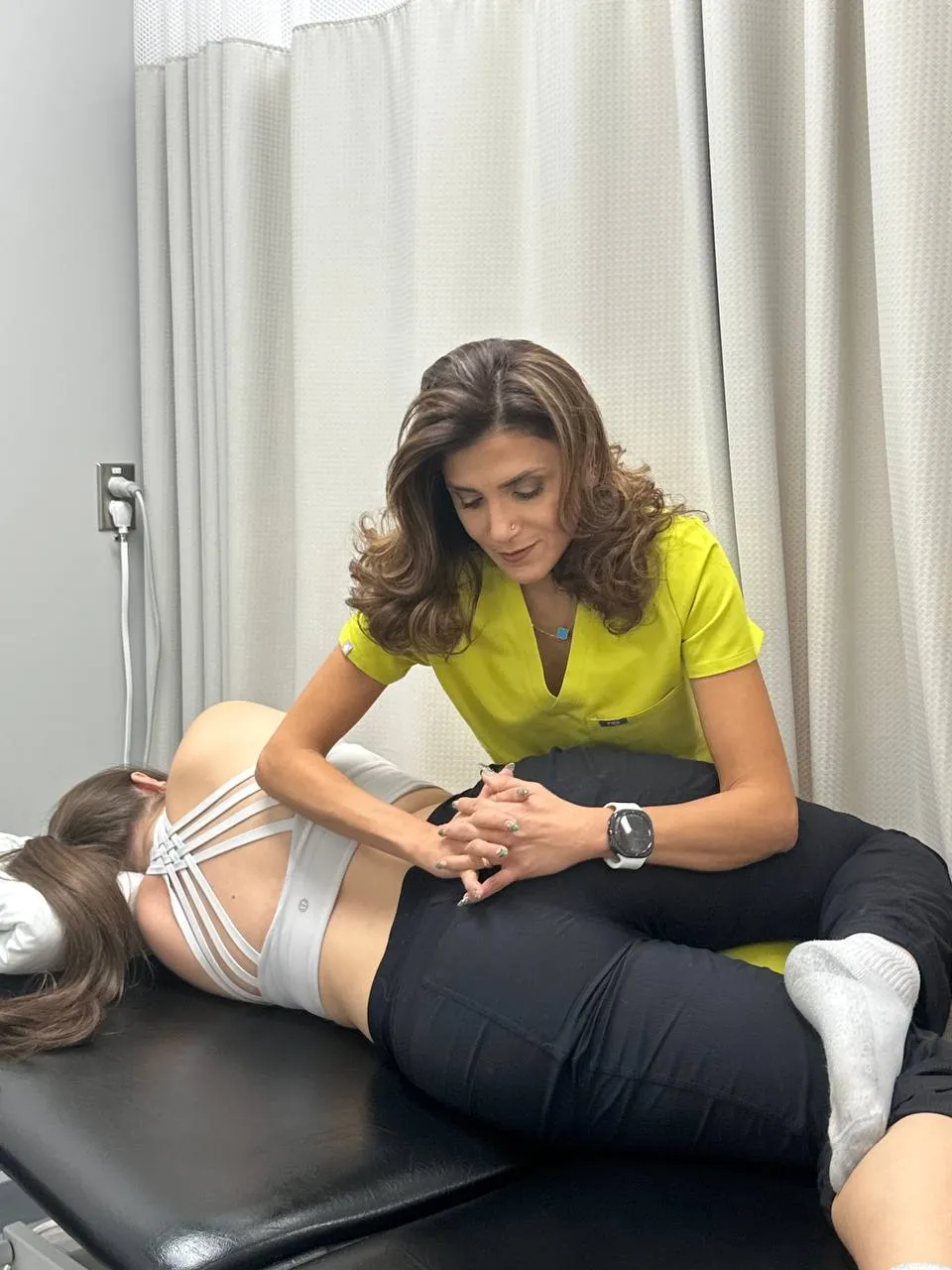
Physiotherapy for hip pain starts with assessment. The goal is to understand what movements trigger symptoms, what tissues may be involved, and what factors are contributing to the pain.
Treatment may include:
- Hip mobility exercises
- Strengthening for the glutes, hips, and core
- Balance training
- Walking retraining
- Manual therapy
- Stretching when appropriate
- Activity modification
- Education on stairs, sitting, and lifting
- Home exercise guidance
- Gradual return to walking or exercise
The plan should be specific to the person. A runner, office worker, older adult, construction worker, parent, or retiree may all need different strategies.
When to Get Help for Hip Pain While Walking
You may want to see a physiotherapist if your hip pain:
- Lasts more than a few days
- Keeps returning during walks
- Causes limping
- Limits stairs or daily activities
- Feels worse over time
- Affects sleep
- Makes it hard to get in or out of a car
- Causes pain in the groin, buttock, or outer hip
- Travels into the thigh or knee
- Does not improve with rest and gentle movement
Early assessment can help prevent compensation patterns and reduce the chance of the pain becoming a longer-term issue.
Warning Signs That Need Medical Attention
Some hip symptoms should be assessed by a doctor or urgent care provider.
Seek medical attention if you have:
- Severe pain after a fall
- Inability to bear weight
- Sudden swelling or deformity
- Fever with hip pain
- Unexplained weight loss
- Severe night pain that does not change with position
- New numbness, weakness, or loss of bladder or bowel control
- Pain that is rapidly worsening
These signs may point to something that needs medical investigation before starting regular physiotherapy.
Tips for Managing Hip Pain While Walking
While waiting for an assessment, some general strategies may help reduce irritation:
- Shorten walks temporarily instead of stopping completely
- Avoid hills or stairs if they sharply increase pain
- Wear supportive footwear
- Take breaks before pain becomes severe
- Avoid sleeping directly on the painful side
- Use heat or ice depending on what feels better
- Keep gentle movement in your routine
- Avoid pushing through sharp or worsening pain
These tips are general. A personalized plan is better when symptoms are persistent or unclear.
Final Thoughts
Hip pain while walking can come from many causes, including arthritis, tendon irritation, muscle weakness, bursitis, lower back referral, hip impingement, or injury. Because the hip works closely with the lower back, knees, ankles, and feet, the source of pain is not always obvious.
Physiotherapy can help identify what is contributing to the pain, improve strength and mobility, and support a safe return to walking, stairs, exercise, and daily activity. If hip pain is limiting your movement or keeps coming back, getting help early can make recovery easier and help you stay active with more confidence.

