Knee pain can affect nearly every part of daily life. Walking through a grocery store, climbing stairs, getting out of a chair, exercising, gardening, commuting, or simply standing for a long period can become uncomfortable when the knee is not functioning properly.
For adults living in Ottawa, knee pain may be influenced by many different factors. Some symptoms develop gradually because of arthritis or repeated strain, while others begin suddenly after a fall, awkward twist, sports injury, or change in activity. Ottawa’s seasonal conditions may also affect how people move, particularly during icy winters, active summers, and periods of increased walking, running, cycling, or recreational sports.
The knee is a complex weight-bearing joint supported by bones, cartilage, ligaments, tendons, muscles, and fluid-filled bursae. Pain may develop when any of these structures becomes injured, irritated, overloaded, or affected by a medical condition. (Mayo Clinic)
At CN Physiotherapy, we help adults from Ottawa, Orléans, Fallingbrook, Navan, Blackburn Hamlet, Beacon Hill, Cumberland, Nepean, and nearby communities understand the cause of their knee pain and work toward safer, more comfortable movement.
Here are ten common causes of knee pain in adults.
1. Knee Osteoarthritis
Osteoarthritis is one of the most common causes of ongoing knee pain in adults, particularly as people get older. It affects the entire joint and involves changes to cartilage, bone, and other tissues. Previous injuries, repeated heavy joint loading, muscle weakness, excess body weight, and certain occupational demands may increase the likelihood of developing it. (Arthritis Society Canada)
Common symptoms include:
- Aching during or after activity
- Morning stiffness
- Stiffness after sitting
- Swelling
- Reduced range of motion
- Grinding or creaking sensations
- A feeling that the knee may buckle
Knee osteoarthritis does not affect everyone in the same way. Some people have mild changes but significant symptoms, while others have more noticeable joint changes with relatively manageable pain.
Physiotherapy may help by strengthening the muscles around the knee, improving joint mobility, increasing walking tolerance, and teaching practical ways to manage activity. Exercise and physical activity are commonly included in osteoarthritis management because they can improve function even though they do not reverse the underlying joint changes. (Arthritis Society Canada)
The GLA:D™ Program available through CN Physiotherapy may also be appropriate for some people living with hip or knee osteoarthritis.
2. Patellofemoral Pain Syndrome
Patellofemoral pain syndrome usually causes discomfort around or behind the kneecap. It is sometimes called runner’s knee, but it can affect people who do not run.
Symptoms may become noticeable when:
- Going up or down stairs
- Squatting
- Running
- Kneeling
- Sitting with bent knees for a long time
- Standing after prolonged sitting
Patellofemoral pain may be related to how the kneecap moves over the thigh bone. Weakness in the hips or thighs, sudden increases in activity, reduced flexibility, poor movement control, or repetitive loading may contribute.
For example, an Ottawa resident who begins running longer distances in spring after a less active winter may place more demand on the knee than it is prepared to tolerate. The problem may not be running itself, but the speed at which training increased or how the body handles the load.
Physiotherapy may include hip and knee strengthening, movement retraining, mobility exercises, taping, and gradual activity progression.
3. Meniscus Injury
The menisci are pieces of strong cartilage that help absorb force between the thigh bone and shin bone. A meniscus may be injured during a twisting movement while the foot remains planted.
Meniscus injuries can occur during sports, work, recreational activity, or an everyday movement such as turning quickly while carrying an object. Age-related tissue changes may also make the meniscus more vulnerable to irritation.
Possible symptoms include:
- Pain along the inner or outer joint line
- Swelling
- Clicking or catching
- Difficulty bending or straightening the knee
- Pain during twisting or squatting
- A feeling that the knee is stuck
Meniscus symptoms do not automatically mean surgery is required. Treatment depends on the type of injury, severity of symptoms, age, activity demands, and whether the knee is locking or unstable.
A physiotherapist can assess strength, mobility, swelling, walking, and functional movement before developing an appropriate rehabilitation plan.
4. Ligament Sprains and Tears
The knee contains several ligaments that help maintain stability. These include the anterior cruciate ligament, posterior cruciate ligament, medial collateral ligament, and lateral collateral ligament.
Ligament injuries may occur when the knee twists, bends in an unusual direction, or experiences a strong impact. The anterior cruciate ligament is particularly vulnerable during sports involving sudden stops, pivoting, landing, and rapid changes of direction. (Mayo Clinic)
Symptoms may include:
- Sudden pain
- A popping sensation
- Rapid swelling
- Instability
- Difficulty bearing weight
- Reduced movement
Some ligament injuries can be managed with rehabilitation, while others require medical or surgical consultation. Physiotherapy is often important whether treatment is conservative or follows surgery because the knee must regain strength, motion, stability, and confidence.
5. Patellar Tendinitis
The patellar tendon connects the kneecap to the shin bone and assists with running, jumping, kicking, and straightening the knee.
Patellar tendinitis, sometimes called jumper’s knee, develops when the tendon becomes irritated or overloaded. It is frequently associated with running, jumping sports, cycling, skiing, or repeated movements that place demand on the front of the knee. (Mayo Clinic)
Pain is often located just below the kneecap and may be worse during:
- Jumping
- Running
- Squatting
- Climbing stairs
- Standing from a low chair
- Repeated knee bending
Tendon pain often requires careful load management. Complete rest may reduce symptoms temporarily but can also reduce the tendon’s capacity to tolerate activity. Rehabilitation usually involves progressively strengthening the tendon and surrounding muscles.
Shockwave therapy may be considered for certain chronic tendon conditions when appropriate, but it should be recommended only after an individual assessment.
6. Knee Bursitis
Bursae are small fluid-filled sacs that reduce friction around joints. When a bursa near the knee becomes irritated, swelling and pain may develop.
Knee bursitis can result from:
- Frequent kneeling
- A direct impact
- Repetitive pressure
- Overuse
- Infection in less common cases
People who work in construction, flooring, gardening, maintenance, or other jobs involving prolonged kneeling may be more vulnerable.
Symptoms can include localized swelling, tenderness, warmth, and pain during movement or pressure. Physiotherapy may help address contributing movement patterns and restore function, but a hot, red, significantly swollen knee—especially with fever—requires prompt medical assessment because infection must be ruled out. (Mayo Clinic)
7. Iliotibial Band Syndrome
The iliotibial band is a thick band of connective tissue that runs along the outside of the thigh from the hip toward the knee.
Iliotibial band syndrome commonly causes pain on the outside of the knee. It is often associated with running or cycling and may develop after a rapid increase in training distance, speed, or hill work. Distance runners and cyclists are particularly susceptible. (Mayo Clinic)
Pain may begin after several minutes of activity and become progressively more noticeable. Some people describe a sharp or burning sensation on the outer knee.
Treatment should look beyond the painful area. Hip strength, running mechanics, training load, footwear, mobility, and recovery habits may all need to be considered.
8. Muscle Strains and Overuse
The muscles surrounding the knee help absorb force and control movement. Strains affecting the quadriceps, hamstrings, calves, or smaller stabilizing muscles may cause pain around the knee.
Overuse symptoms often develop when activity increases faster than the body can adapt.
Examples include:
- Returning to the gym after a long break
- Beginning a new running program
- Increasing cycling distance
- Walking much more than usual
- Repeated stair climbing
- Starting a physically demanding job
- Participating in seasonal sports
The pain may not be caused by structural damage. It may reflect temporary overload, reduced conditioning, or poor recovery.
Physiotherapy can help identify which tissues are irritated and create a gradual return-to-activity plan that avoids both excessive rest and premature loading.
9. Pain Referred From the Hip, Back, or Foot
Sometimes the knee hurts even though the primary problem is located elsewhere.
Hip weakness or stiffness can change how the thigh and knee move. Foot or ankle pain may alter walking mechanics and place additional stress on the knee. Problems affecting the lower back or nerves may also produce symptoms that travel toward the knee.
Changes in walking caused by hip or foot pain can increase stress on the knee joint. (Mayo Clinic)
This is why a complete physiotherapy assessment should not focus only on the painful knee. The physiotherapist may also examine:
- Hip mobility
- Hip strength
- Ankle movement
- Foot position
- Walking pattern
- Balance
- Lower-back movement
Treating the true source of the problem is more effective than repeatedly treating only the area where pain is felt.
10. Gout and Other Inflammatory Conditions
Not all knee pain is mechanical. Gout, rheumatoid arthritis, pseudogout, and joint infection can also cause knee pain.
Gout develops when uric acid crystals collect within a joint. Pseudogout involves calcium-containing crystals and frequently affects the knee. Rheumatoid arthritis is an inflammatory autoimmune condition that may involve both knees or multiple joints. (Mayo Clinic)
Symptoms that suggest an inflammatory or medical cause may include:
- Sudden severe pain
- Significant swelling
- Redness
- Warmth
- Pain at rest
- Fever
- Symptoms in several joints
These conditions require medical evaluation. Physiotherapy may support function and mobility after the condition has been appropriately assessed and managed, but it does not replace medical treatment for infection, gout, or inflammatory arthritis.
When Should Knee Pain Be Assessed?
Some mild knee pain improves with temporary activity modification. However, professional assessment is recommended when pain persists, repeatedly returns, or begins limiting normal movement.
Consider booking an assessment if:
- Knee pain lasts longer than one or two weeks
- Walking or climbing stairs is becoming difficult
- The knee feels unstable
- Swelling keeps returning
- You cannot fully bend or straighten the knee
- Pain affects sleep
- You recently changed your exercise routine
- Symptoms are stopping you from working or exercising
Prompt medical attention is important when the knee is visibly deformed, cannot bear weight, becomes severely swollen, or is red and hot with fever. Sudden swelling, severe pain after injury, or an obvious loss of movement should also be assessed urgently. (Mayo Clinic)
How Physiotherapy Can Help With Knee Pain
Physiotherapy treatment begins with determining why the knee hurts.
An assessment may include:
- Knee range of motion
- Muscle strength
- Joint stability
- Swelling
- Walking pattern
- Balance
- Hip and ankle function
- Squatting or stair movement
- Work, sport, and activity demands
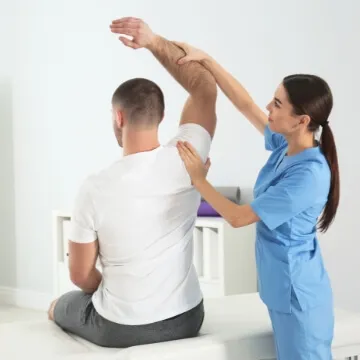
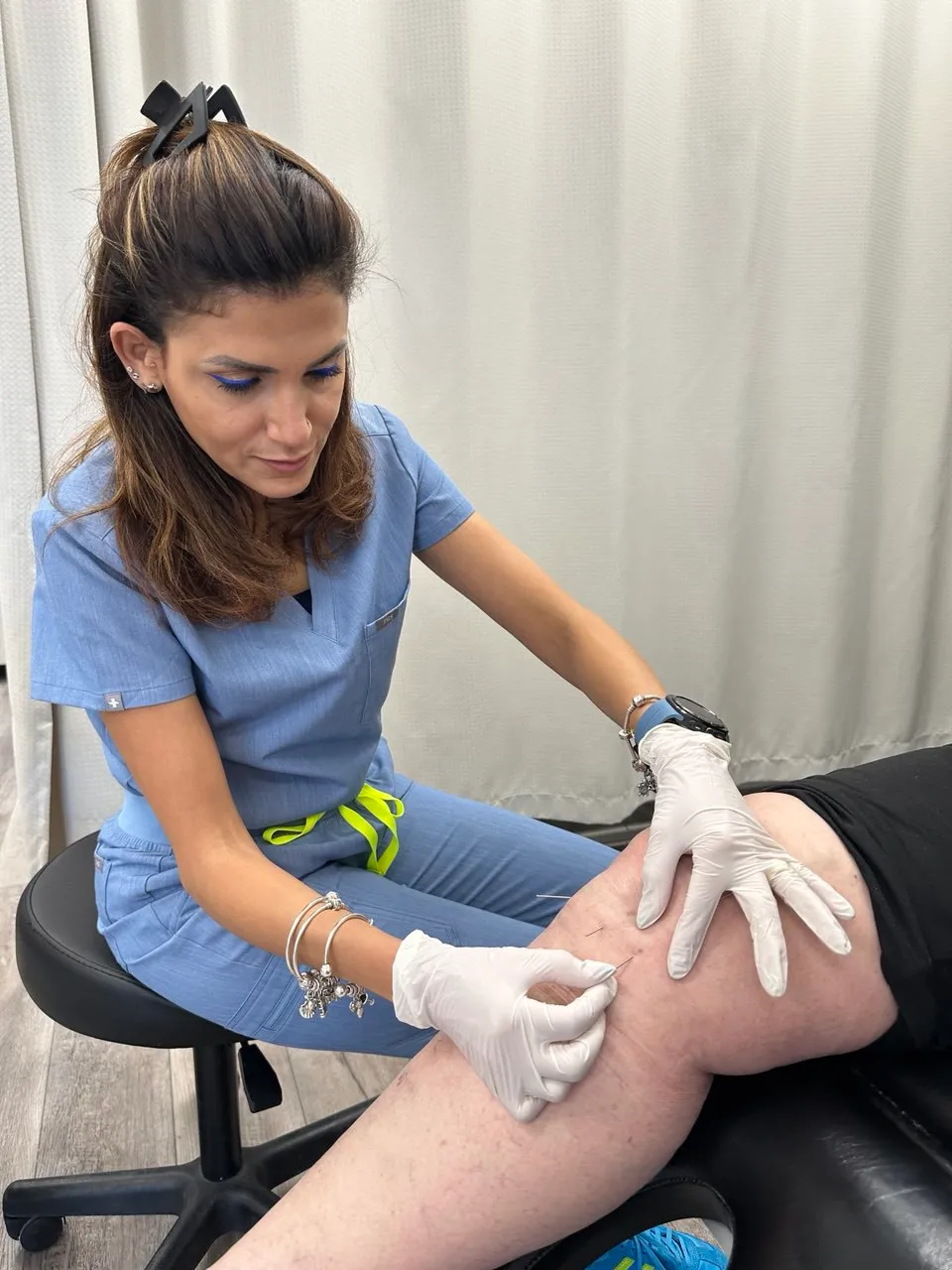
Your treatment plan may then include therapeutic exercise, manual therapy, mobility work, balance training, taping, education, and gradual return to activity.
For people with osteoarthritis, treatment may focus on maintaining independence and improving tolerance for walking, stairs, and daily activities. For sports injuries, rehabilitation may place greater emphasis on strength, control, landing, acceleration, and return-to-sport preparation.
There is no single knee-pain program that works for everyone. The treatment must match the condition, the individual, and the activities they want to resume.
Frequently Asked Questions About Knee Pain
Why does my knee hurt when I go downstairs?
Going downstairs places substantial demand on the muscles controlling the knee. Pain may be related to patellofemoral irritation, arthritis, reduced thigh strength, or poor movement control.
Can physiotherapy help knee arthritis?
Physiotherapy may help reduce symptoms, strengthen supporting muscles, improve mobility, and make daily activities easier. It cannot reverse osteoarthritis, but exercise-based management can improve function. (Arthritis Society Canada)
Should I stop exercising when my knee hurts?
Not always. Some activities may need to be temporarily modified, but complete inactivity can lead to weakness and stiffness. A physiotherapist can help determine which movements are appropriate.
Why does my knee click?
Clicking can occur for several reasons and is not always a sign of injury. Clicking accompanied by pain, swelling, locking, or instability should be assessed.
Can foot problems cause knee pain?
Yes. Foot or ankle problems may change your walking pattern and increase stress on the knee.
Is swelling always serious?
Minor swelling may occur after activity or injury, but sudden, severe, hot, or persistent swelling requires professional evaluation.
How long does knee pain take to improve?
Recovery time depends on the cause. A mild strain may settle within weeks, while arthritis, tendon problems, ligament injuries, or post-surgical rehabilitation may require a longer plan.
Do I need imaging before physiotherapy?
Not necessarily. Many knee conditions can initially be assessed through symptoms and physical examination. Imaging may be recommended when there has been significant trauma, symptoms are not improving, or a specific medical concern must be investigated.
Find the Cause of Your Knee Pain
Knee pain is a symptom, not a diagnosis. It may result from osteoarthritis, tendon irritation, ligament damage, a meniscus problem, altered walking mechanics, muscle overload, or an underlying medical condition.
The most effective first step is understanding what is causing the pain rather than guessing or avoiding movement indefinitely.
CN Physiotherapy provides personalized knee assessments and rehabilitation for adults throughout Ottawa, Orléans, Fallingbrook, Navan, Blackburn Hamlet, Beacon Hill, Cumberland, Nepean, and surrounding communities.
If knee pain is interfering with your work, exercise, mobility, or daily routine, contact CN Physiotherapy to request an appointment and begin a treatment plan based on your individual needs.