You get out of bed in the morning, put your foot on the floor, and immediately feel a sharp pain underneath your heel.
After walking around for a few minutes, it may start to feel better.
Then you sit at your desk, drive somewhere, or relax for an hour. When you stand up again, the heel pain returns.
If this sounds familiar, you may be experiencing symptoms associated with plantar fasciitis, more accurately referred to in many cases as plantar fasciopathy.
Heel pain can become surprisingly disruptive. Every step places pressure through your foot, meaning symptoms can affect walking, working, exercising, shopping, running, and simply getting around your home.
At CN Physiotherapy, we help patients from Ottawa, Orléans, Fallingbrook, Beacon Hill, Blackburn Hamlet, Navan, Cumberland, Nepean, and surrounding communities manage foot and heel problems through individualized physiotherapy.
We also offer custom orthotics, including Cryos 3D Dynamic Orthotics and Cryoscan 3D technology, for appropriate patients who may benefit from additional foot support.
If your first few steps every morning have become the worst part of your day, here is what you should know.
What Is Plantar Fasciitis?
The plantar fascia is a strong band of connective tissue running along the bottom of your foot. The American Academy of Orthopaedic Surgeons’ plantar fasciitis overview explains that it connects the heel to the front of the foot and supports the arch.
It extends from around the heel toward the front of the foot and plays an important role in supporting your foot as you stand, walk, and move.
Plantar heel pain often develops when this tissue is exposed to demands beyond what it is currently able to tolerate.
Although the term plantar fasciitis is widely used, persistent cases are not necessarily characterized by inflammation alone. That is one reason simply trying to “reduce inflammation” may not address everything contributing to the problem.
Your rehabilitation may also need to consider strength, mobility, footwear, activity levels, and how much load your foot is currently tolerating.
What Does Plantar Fasciitis Feel Like?
The symptoms can vary, but people with plantar fasciitis commonly report pain underneath the heel or along the bottom of the foot.
You may experience:
- Sharp heel pain
- Aching underneath the foot
- Pain during your first steps in the morning
- Pain when standing after sitting
- Pain after long periods of walking
- Discomfort after exercise
- Heel tenderness
- Difficulty walking barefoot
- Pain after prolonged standing
- Symptoms after increasing running or walking
Some people describe the first few morning steps as feeling like they are stepping onto something sharp.
After moving around, symptoms may decrease.
That pattern is one reason morning heel pain is so commonly associated with plantar fascia problems. Healthdirect Australia’s plantar fasciitis guidance also identifies pain during the first steps in the morning or after prolonged sitting as a typical symptom.
Why Does My Heel Hurt When I First Get Out of Bed?
This is one of the most common questions people with plantar fasciitis ask.
Your foot remains relatively unloaded while you sleep.
When you suddenly stand up in the morning, the plantar fascia and surrounding tissues must immediately begin accepting your body weight again.
If the area is sensitive, those first several steps can be uncomfortable.
Symptoms may gradually improve as you continue moving.
The same thing can happen after sitting.
You may feel relatively comfortable while working at your desk, watching television, or driving. Then you stand up and your first several steps hurt.
This is sometimes called first-step pain.
Is Morning Heel Pain Always Plantar Fasciitis?
No.
Although plantar fasciitis is a common cause of heel pain, it is not the only possibility.
Heel pain may also be related to other conditions involving the foot, ankle, nerves, bones, tendons, or surrounding tissues.
That is why persistent heel pain deserves a proper assessment.
A physiotherapist can examine where your symptoms are located, when they occur, what movements trigger them, and how your foot and lower limb are functioning.
What Causes Plantar Fasciitis?
There is rarely one single cause.
Plantar fascia symptoms can develop when the demands placed on your foot exceed its current capacity.
Several factors may contribute.
1. Suddenly Increasing Your Walking
Imagine that you normally walk 3,000 or 4,000 steps per day.
Then you go on vacation and suddenly walk 15,000 steps every day for a week.
Your feet have experienced a dramatic increase in workload.
For some people, that increase may contribute to heel pain.
The same can happen when warmer Ottawa weather arrives and you suddenly begin walking significantly more than you did during winter.
2. Starting a Running Program
Running places repeated demands on the feet and lower limbs.
If you begin running too frequently, increase your distance too quickly, or return to running after a long break, your body may not have enough time to adapt.
This does not mean running is bad for your feet.
It means training should be progressed appropriately.
3. Spending Long Hours Standing
People who work on their feet may experience significant daily loading through the plantar fascia. The U.S. National Institute for Occupational Safety and Health has also reviewed the musculoskeletal discomfort associated with prolonged standing at work.
Healthcare professionals, tradespeople, retail employees, restaurant workers, teachers, warehouse workers, and others may spend much of the day standing or walking.
If heel pain develops, simply telling someone to stop standing may not be realistic.
Treatment should take their occupation into consideration.
4. Footwear Changes
Changing shoes can change the way your foot is loaded.
This can be particularly noticeable when switching from supportive footwear to very flat or minimally cushioned shoes.
Some people also notice symptoms when they begin walking barefoot more frequently.
Footwear is not necessarily the only cause of plantar fasciitis, but it can be an important part of the overall assessment.
5. Reduced Calf or Ankle Mobility
The foot does not work in isolation.
Your ankle and calf contribute significantly to walking and running.
Reduced ankle mobility or calf flexibility may influence the way forces move through the foot.
A physiotherapist may therefore assess your ankle even though your pain is located at your heel.
6. Reduced Foot or Lower-Limb Strength
The muscles of your feet, calves, hips, and legs all contribute to controlling movement.
If these areas do not have enough capacity for the activities you perform, strengthening may become part of your rehabilitation.
7. Changes in Body Weight
Changes in body weight can alter the amount of load passing through the feet during standing and walking.
This does not mean weight is the only explanation for plantar fasciitis, nor should treatment focus solely on body weight.
It is simply one of many factors that may be considered during an individualized assessment.
Why Does My Heel Hurt After Sitting?
This can occur for a similar reason to morning pain.
After the foot has been resting, suddenly loading the irritated tissue may reproduce symptoms.
Patients often notice this after:
- Sitting at a desk
- Driving
- Watching television
- Eating dinner
- Sitting through a meeting
- Travelling
After several steps, the pain may begin to decrease again.
If this pattern occurs repeatedly, an assessment may help determine whether plantar fasciitis or another condition is responsible.
Where Does Plantar Fasciitis Hurt?
Plantar fasciitis commonly causes discomfort around the bottom of the heel.
Some people feel symptoms extending farther along the arch.
The exact location matters.
Your physiotherapist may palpate different areas of your heel and foot to identify which structures appear sensitive.
They may also examine how symptoms respond to movement and loading.
Can Plantar Fasciitis Affect Both Feet?
Yes.
Some people experience symptoms in only one foot, while others develop heel pain on both sides.
Bilateral symptoms may warrant consideration of broader factors including activity levels, footwear, lower-limb mechanics, and medical history.
Should I Stop Walking If I Have Plantar Fasciitis?
Not necessarily.
Completely avoiding walking is often unrealistic and may not be required.
However, continuing to perform an amount of activity that repeatedly causes major symptom flare-ups may also be counterproductive.
A better approach may be load management.
For example, suppose your heel becomes significantly painful after a 60-minute walk.
Your rehabilitation plan may temporarily involve shorter walks that your foot can better tolerate.
As your symptoms and capacity improve, walking time can gradually increase.
The goal is not to avoid activity forever.
The goal is to build your ability to tolerate it.
Should I Walk Barefoot With Plantar Fasciitis?
This depends on the individual.
Some people with heel pain find barefoot walking uncomfortable, particularly on hard surfaces.
Others tolerate it well.
During an irritable stage, supportive footwear may make everyday walking more comfortable for some patients.
Your physiotherapist can make recommendations based on your symptoms rather than assuming everyone needs the same footwear.
What Happens If I Ignore Plantar Fasciitis?
Some episodes of heel pain may improve over time.
However, persistent pain can gradually change the way you walk.
You may begin:
- Limping
- Avoiding pressure on one foot
- Walking less
- Avoiding exercise
- Taking shorter steps
- Changing how you use stairs
- Avoiding recreational activities
These adaptations may eventually affect other parts of your body or reduce your overall activity level.
If heel pain has been present for weeks or months, consider having it assessed.
How Can Physiotherapy Help Plantar Fasciitis?
Physiotherapy can address more than the painful area itself.
Your physiotherapist can assess your:
- Foot mobility
- Ankle mobility
- Strength
- Calf function
- Walking
- Balance
- Foot mechanics
- Activity levels
- Footwear
- Exercise habits
Treatment can then be designed around the findings.
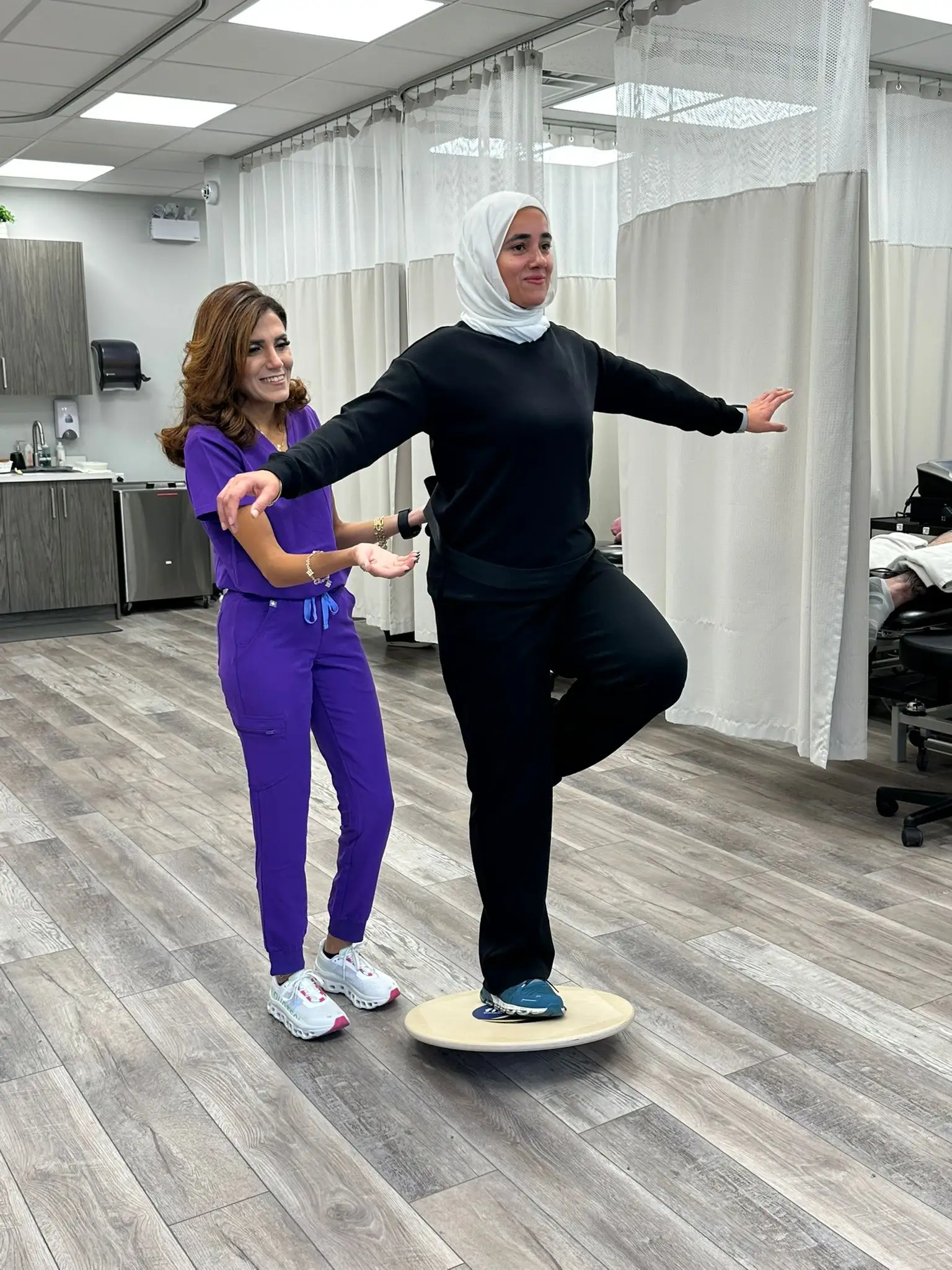
Strengthening for Plantar Fasciitis
Strengthening can be an important component of rehabilitation. An updated heel-pain clinical practice guideline available through the U.S. National Library of Medicine reviews evidence-based interventions used in plantar heel pain management.
Depending on your needs, exercises may target your:
- Calf muscles
- Foot muscles
- Ankle muscles
- Hip muscles
- Lower limb
Your exercises should gradually progress.
The objective is to increase the amount of force your foot can tolerate so everyday activities become easier.
Stretching for Plantar Fasciitis
Stretching may be included in some rehabilitation programs.
Your physiotherapist may recommend stretches targeting the calf, ankle, or plantar fascia depending on your assessment.
However, stretching alone may not address every contributing factor.
If symptoms are related partly to reduced tissue capacity, strengthening and gradual loading may also be important.
Manual Therapy for Heel Pain
Manual therapy may be incorporated into treatment when appropriate.
Hands-on techniques may be used to address mobility restrictions involving the foot or ankle.
At CN Physiotherapy, manual therapy is generally considered as one component of a broader rehabilitation plan rather than the only treatment.
Can Shockwave Therapy Help Plantar Fasciitis?
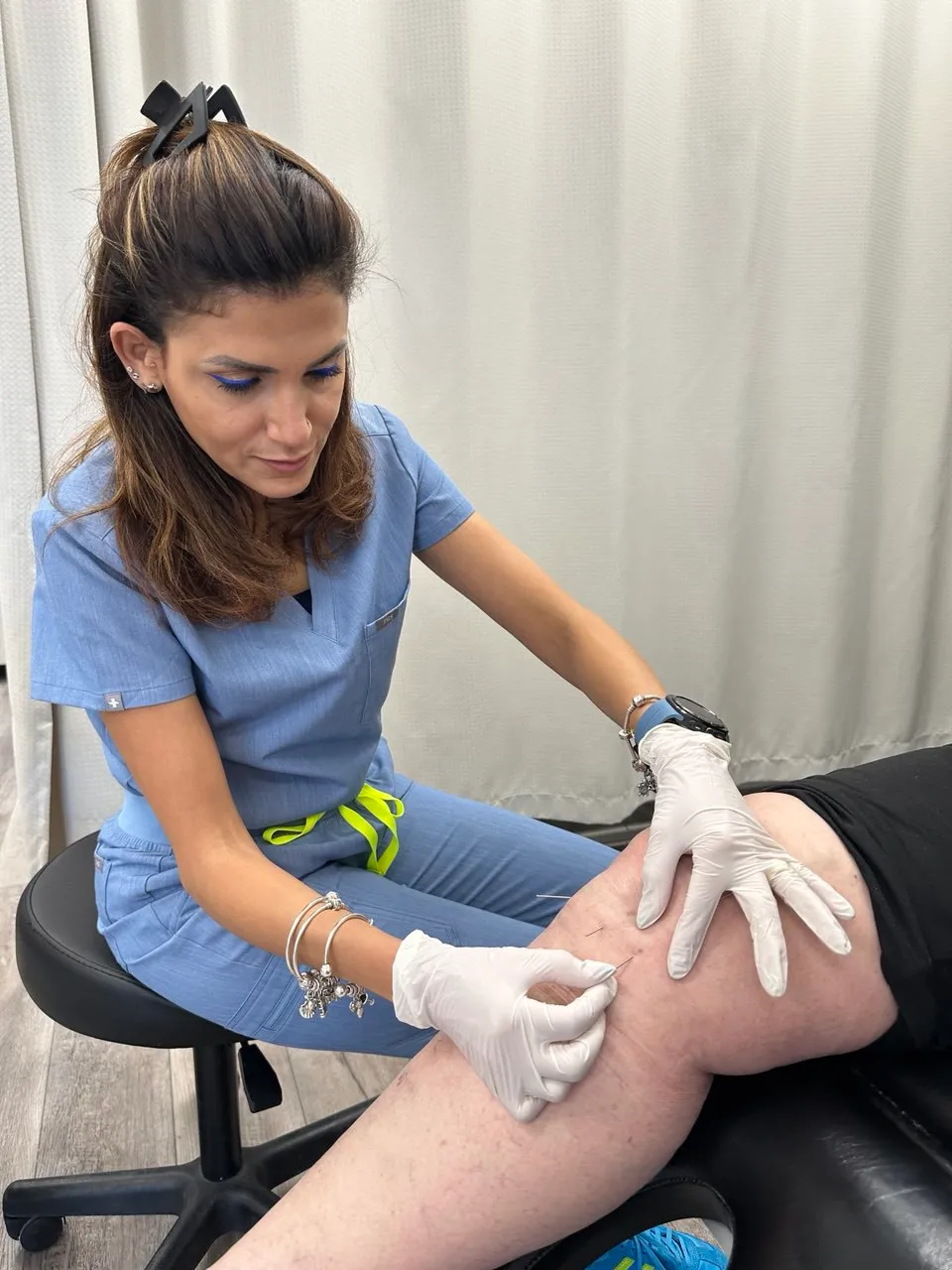
Shockwave therapy is another treatment available at CN Physiotherapy.
Shockwave uses acoustic waves and is used in physiotherapy for certain musculoskeletal conditions, including some chronic tendon and heel problems.
For patients with persistent plantar heel pain, a physiotherapist may determine whether shockwave therapy is an appropriate addition to treatment. Research indexed by the U.S. National Library of Medicine discusses the evidence, treatment considerations, and limitations surrounding shockwave therapy for plantar fasciitis.
It is not automatically necessary for every case.
Your condition should first be properly assessed.
Can Custom Orthotics Help Plantar Fasciitis?
For some patients, custom orthotics may be helpful as part of an overall treatment plan.
Orthotics are devices placed inside footwear to provide individualized support and influence how forces are distributed through the foot.
They may be considered when your physiotherapist identifies foot mechanics, pressure distribution, or support requirements that may benefit from modification.
The important point is that orthotics should not simply be viewed as a universal cure for heel pain. A Cochrane review of custom-made foot orthoses similarly emphasizes evaluating orthoses according to the specific condition and available evidence.
Your feet should be assessed first.
What Are Custom Orthotics?
Unlike generic insoles purchased from a pharmacy or sporting goods store, custom orthotics are created according to the individual’s feet and clinical requirements.
At CN Physiotherapy, our physiotherapists can perform an orthotic assessment that considers factors such as:
- Foot structure
- Walking
- Lower-limb mechanics
- Symptoms
- Activity level
- Medical conditions
- Footwear
- Functional goals
The goal is to determine whether custom orthotics are appropriate and, if so, what type of support may be beneficial.
Custom Orthotics at CN Physiotherapy
CN Physiotherapy offers Cryos 3D Dynamic Orthotics.
Our orthotic technology includes Cryoscan 3D, which provides advanced 3D foot scanning.
Rather than relying exclusively on a traditional impression of the foot, 3D scanning technology can capture detailed information that can be used in the custom orthotic process.
This technology can be particularly useful when creating an orthotic designed around an individual’s foot structure and needs.
What Is Cryoscan 3D?
Cryoscan 3D is a foot-scanning technology used as part of the custom orthotics process.
The system allows detailed information about the foot to be captured digitally.
Your physiotherapist can combine this information with your clinical assessment.
Technology alone does not determine the treatment.
The assessment remains essential because two people with similar-looking feet may have completely different symptoms, activity levels, and functional requirements.
Custom Orthotics vs Store-Bought Insoles
Patients frequently ask whether custom orthotics are really different from generic insoles.
Prefabricated insoles are manufactured to fit broad groups of people.
They may provide cushioning or general support and can be perfectly adequate for some individuals.
Custom orthotics, on the other hand, are created based on an individualized assessment and the specific shape and requirements of your feet.
Neither option should automatically be prescribed to everyone.
The appropriate choice depends on the person.
Will Orthotics Cure My Plantar Fasciitis?
It is better to think of orthotics as one possible component of a treatment plan rather than a guaranteed cure.
For some people, they may help improve comfort or manage how the foot is loaded.
However, your rehabilitation may still need to address:
- Strength
- Mobility
- Activity levels
- Walking tolerance
- Footwear
- Exercise progression
The goal should be to improve the overall capacity and function of your foot.
How Do I Know If I Need Custom Orthotics?
An orthotic assessment may be worth considering if you experience persistent foot or heel pain and your physiotherapist believes additional support may benefit you.
Custom orthotics may also be considered for other foot and lower-limb problems.
At CN Physiotherapy, we assess the individual rather than assuming every patient with plantar fasciitis requires orthotics.
What Shoes Should I Wear for Plantar Fasciitis?
There is no single shoe that works for everyone.
Comfort is important.
Some patients prefer shoes that provide:
- Appropriate cushioning
- A secure fit
- Adequate room for the foot
- Comfortable support
- Stability during walking
If one particular pair of shoes consistently makes your heel pain worse, bring that information to your assessment.
You may also want to bring the footwear you use most frequently.
Can Plantar Fasciitis Be Caused by Flat Feet?
Foot structure may influence loading, but having flat feet does not automatically mean you will develop plantar fasciitis.
Plenty of people have relatively flat feet without pain.
Likewise, people with higher arches can also develop heel pain.
This is why treatment should focus on the individual rather than simply looking at the appearance of the foot.
Can Plantar Fasciitis Cause Ankle or Knee Pain?
When heel pain changes the way you walk, other parts of the lower limb may experience different demands.
Some patients begin limping or shifting weight away from the painful foot.
Your physiotherapist may therefore examine your ankle, knee, hip, and overall walking pattern rather than focusing exclusively on your heel.
Heel Pain and Running in Ottawa
Ottawa has a large running community.
Whether you run along neighbourhood streets, pathways, trails, or train for local races, persistent heel pain can quickly interfere with your routine.
If plantar fasciitis develops, your treatment does not necessarily need to end with “stop running.”
Instead, your physiotherapist can help determine:
- How much running you currently tolerate
- Whether your training increased too quickly
- Whether strength needs improvement
- Whether footwear should be considered
- How to progressively return to normal mileage
Returning gradually can help your body adapt.
Heel Pain During Ottawa Winters
Winter changes the way we move.
Heavy boots, slippery surfaces, snow, ice, and reduced outdoor activity can all influence walking.
Then spring arrives.
People suddenly return to longer walks, running, gardening, golf, and outdoor sports.
This rapid increase in activity can sometimes expose tissues to more load than they are prepared for.
Maintaining strength and gradually increasing spring activity may help reduce this abrupt transition.
Plantar Fasciitis in Orléans and Ottawa Residents
Heel pain may sound like a relatively small problem until every step starts hurting.
For people living in Orléans, Fallingbrook, Beacon Hill, Blackburn Hamlet, Navan, Cumberland, Nepean, and elsewhere in Ottawa, foot pain can interfere with work, family activities, exercise, shopping, and recreation.
Perhaps you want to return to running.
Maybe your job requires you to stand all day.
Perhaps walking your dog has become uncomfortable.
Or maybe you simply want to get out of bed without dreading your first step.
Your rehabilitation goals should reflect what matters to you.
When Should I See a Physiotherapist for Heel Pain?
Consider scheduling an assessment if:
- Heel pain continues for more than a short period
- Morning pain keeps returning
- Walking is becoming uncomfortable
- You are limping
- Pain is preventing you from exercising
- Symptoms are affecting work
- You have reduced your normal activity because of pain
- Your heel pain keeps returning after temporary improvement
- You are unsure which exercises to perform
- You are considering custom orthotics
The earlier you understand what is contributing to the problem, the sooner you can begin addressing it appropriately.
When Should Heel Pain Be Medically Assessed?
Not every type of heel pain is plantar fasciitis.
Seek appropriate medical assessment if symptoms occur following significant trauma, if you cannot bear weight, if there is substantial unexplained swelling or redness, or if you develop other concerning or rapidly worsening symptoms. The UK National Health Service’s plantar fasciitis guidance also recommends medical review when foot pain is severe, worsening, recurrent, or accompanied by tingling or loss of sensation.
Persistent numbness, significant neurological symptoms, or unusual symptoms should also be appropriately evaluated.
What Happens During a Physiotherapy Assessment for Plantar Fasciitis?
Your physiotherapist may begin by asking:
- When did your heel pain begin?
- Where exactly does it hurt?
- Is it worse in the morning?
- Does it hurt after sitting?
- How much do you walk?
- Do you run?
- What shoes do you wear?
- What do you do for work?
- Have your activity levels recently changed?
- Have you experienced foot problems before?
Your physical assessment may include:
- Foot mobility
- Ankle movement
- Calf strength
- Foot strength
- Balance
- Walking
- Lower-limb strength
- Functional movement
If custom orthotics are being considered, additional assessment and scanning may also be performed.
How Long Does Plantar Fasciitis Take to Improve?
There is no single recovery timeline.
Some cases improve relatively quickly.
Persistent cases may require a longer period of progressive rehabilitation.
Recovery can depend on:
- How long symptoms have been present
- Your activity level
- Your occupation
- Foot strength
- Mobility
- Exercise consistency
- Training demands
- Other health factors
One of the most important parts of rehabilitation is gradually increasing what your foot can tolerate rather than repeatedly moving between complete rest and excessive activity.
Frequently Asked Questions About Plantar Fasciitis
Why is plantar fasciitis worse in the morning?
The plantar fascia remains relatively unloaded while you sleep. When you stand, the tissue suddenly has to accept body weight again. An irritated plantar fascia may therefore be particularly sensitive during the first several steps.
Does plantar fasciitis go away?
Many cases can improve with appropriate conservative management, but recovery time varies. Persistent symptoms may benefit from physiotherapy assessment and an individualized treatment plan.
Is walking good for plantar fasciitis?
Walking may still be appropriate, but the amount should reflect your current tolerance. If long walks consistently cause major flare-ups, temporarily reducing distance and gradually rebuilding capacity may be useful.
Should I massage my heel?
Some people find massage temporarily comfortable, but massage alone may not address the factors contributing to plantar fasciitis. Strength, mobility, activity management, and footwear may also need consideration.
Can physiotherapy help plantar fasciitis?
Physiotherapy may help by assessing contributing factors and developing a treatment plan involving exercise, strengthening, mobility work, education, manual therapy, activity modification, and other appropriate treatments.
Do I need orthotics for plantar fasciitis?
Not everyone does. An assessment can help determine whether custom orthotics may be useful in your particular situation.
Are custom orthotics better than store-bought insoles?
Custom orthotics are designed based on an individualized assessment, while store-bought insoles provide generalized support. Which option is appropriate depends on your needs.
Can I run with plantar fasciitis?
Some people can continue running with modifications, while others may temporarily need to reduce running volume. Your symptoms, severity, training history, and physical assessment should guide the decision.
Is heel pain caused by a heel spur?
Heel spurs can appear on imaging, but their presence does not necessarily explain someone’s symptoms. Clinical assessment is important when determining what is contributing to heel pain.
Can plantar fasciitis come back?
Yes. Symptoms may recur, particularly if activity increases faster than your foot can tolerate. Maintaining strength and managing training progression may help.
Can shockwave therapy help plantar fasciitis?
Shockwave therapy may be considered for certain cases of persistent plantar heel pain. A physiotherapist can determine whether it is appropriate based on your assessment.
Can custom orthotics help with more than plantar fasciitis?
Yes. Orthotics may be considered for several foot and lower-limb conditions depending on the individual’s symptoms, mechanics, and clinical assessment.
How CN Physiotherapy Can Help
You rely on your feet thousands of times every day.
When every first step hurts, it can become tempting to simply stop walking, exercising, or participating in the activities you enjoy.
But persistent heel pain deserves more than guesswork.
At CN Physiotherapy, our physiotherapists can assess your foot, ankle, strength, mobility, walking pattern, activity level, and individual goals to determine an appropriate rehabilitation plan.
Depending on your needs, treatment may include:
- Physiotherapy
- Therapeutic exercise
- Strengthening
- Mobility exercises
- Manual therapy
- Shockwave therapy
- Activity modification
- Footwear recommendations
- Custom orthotic assessment
- Cryos 3D Dynamic Orthotics
- Cryoscan 3D foot scanning
Our goal is to help you improve your ability to stand, walk, exercise, work, and move comfortably.
We proudly help patients from Ottawa, Orléans, Fallingbrook, Beacon Hill, Blackburn Hamlet, Navan, Cumberland, Nepean, and surrounding communities.
Take the First Step Toward Less Heel Pain
If getting out of bed has become something you dread because of heel pain, it may be time to find out why.
Plantar fasciitis can interfere with walking, work, exercise, and everyday life, but there are conservative treatment options available.
A physiotherapy assessment can help identify contributing factors and create a structured plan for rebuilding strength, mobility, and activity tolerance.
For appropriate patients, custom orthotics and Cryos 3D foot scanning may also be incorporated into the overall management strategy.
If you are experiencing plantar fasciitis or morning heel pain in Ottawa, Orléans, Fallingbrook, Beacon Hill, Blackburn Hamlet, Navan, Cumberland, Nepean, or the surrounding area, contact CN Physiotherapy to request an appointment.
Your recovery can start today.
Request an appointment with CN Physiotherapy.