
Lower back pain can make even simple activities difficult.
Getting out of bed, tying your shoes, lifting groceries, driving to work, sitting at your desk, gardening, exercising, or walking around the neighbourhood may suddenly become uncomfortable.
For some people, back pain appears after a specific event such as lifting something heavy. For others, it develops gradually without an obvious injury.
Either way, lower back pain can quickly affect work, sleep, exercise, family activities, and overall quality of life.
At CN Physiotherapy, we help patients from Orléans, Fallingbrook, Navan, Cumberland, Blackburn Hamlet, Beacon Hill, Ottawa, Nepean, and surrounding communities who are experiencing back pain, stiffness, weakness, sciatica, and movement limitations.
The important thing to understand is that lower back pain does not always mean something is seriously damaged.
Many episodes of mechanical lower back pain can be managed conservatively with an individualized physiotherapy program.
The first step is understanding what may be contributing to your symptoms.
How Common Is Lower Back Pain?
Lower back pain is one of the most common musculoskeletal complaints experienced by adults. According to the World Health Organization’s overview of low back pain, it is the leading cause of disability worldwide and can affect people at almost any age.
It can affect people of almost every age and activity level.
You may develop back pain if you:
- Work at a desk
- Perform physical labour
- Drive for long periods
- Regularly lift objects
- Play sports
- Exercise at the gym
- Spend significant time gardening
- Suddenly increase your activity
- Have recently been inactive
- Are recovering from an injury
Sometimes there is an identifiable event that triggers symptoms.
Other times there is not.
That does not make the pain any less real, but it does mean treatment should focus on the full picture rather than searching for one simple explanation.
What Is Mechanical Lower Back Pain?
A large amount of lower back pain is described as mechanical.
This generally means symptoms appear to be influenced by movement, posture, activity, or loading of the muscles and joints around the spine.
Mechanical back pain may feel worse when:
- Bending
- Lifting
- Sitting
- Standing
- Twisting
- Walking
- Getting up from a chair
- Rolling in bed
For many patients, symptoms also change depending on position.
You may feel relatively comfortable while walking but uncomfortable while sitting.
Another person may experience the opposite.
These patterns can help a physiotherapist understand your condition and determine which movements may be useful during rehabilitation.
Common Causes of Lower Back Pain
Lower back pain does not have one universal cause.
Several structures and factors may contribute.
1. Muscle Strain
Muscle strains are among the most common causes of acute lower back pain.
A strain may occur after:
- Lifting something awkwardly
- Shovelling snow
- Moving furniture
- Gardening
- Sudden twisting
- Returning to exercise too quickly
- Repetitive physical work
You may notice soreness, stiffness, muscle guarding, or discomfort with movement.
Many strains improve with time and appropriate movement, but physiotherapy can help restore mobility and progressively rebuild strength.
2. Joint Irritation
The joints of the lower spine help guide movement.
Like other joints in the body, they may become irritated or stiff.
Symptoms can sometimes be localized to one side of the lower back and may worsen with particular movements.
Physiotherapy may involve movement exercises, strengthening, manual therapy, and activity modification depending on your assessment.
3. Disc-Related Pain
Between the bones of your spine are discs that help absorb and distribute forces.
Changes or irritation involving a lumbar disc may contribute to back pain.
Sometimes disc-related symptoms remain in the lower back.
In other cases, irritation affecting nearby nerve roots may contribute to symptoms travelling into the leg.
A disc problem does not automatically mean you need surgery.
Many disc-related conditions are managed conservatively.
4. Sciatica and Nerve Irritation
Sciatica commonly refers to pain or nerve-related symptoms extending from the lower back or buttock into the leg.
You may experience:
- Burning
- Tingling
- Pins and needles
- Numbness
- Shooting pain
- Leg weakness
Sciatica is a symptom pattern rather than one single diagnosis.
Your physiotherapist can assess whether your symptoms appear consistent with nerve irritation and determine whether physiotherapy may be appropriate.
5. Spinal Stenosis
Spinal stenosis involves narrowing of spaces within the spine that may affect nearby nerves.
It becomes more common with age.
Some patients notice symptoms while standing or walking and relief when sitting or leaning forward.
A physiotherapy program may focus on maintaining mobility, improving strength, building walking tolerance, and helping you continue daily activity.
6. Degenerative Changes
Age-related changes in the spine are common.
Many adults will show changes on imaging even if they do not experience pain.
This is important because an X-ray or MRI finding does not always explain exactly why someone hurts.
Your physiotherapist will therefore consider imaging alongside your symptoms, movement, strength, medical history, and functional limitations.
7. Reduced Strength
Weakness is not always the cause of back pain, but reduced physical capacity can make certain activities more demanding.
If your body is not accustomed to lifting, bending, walking long distances, exercising, or performing repetitive work, sudden increases in activity can be challenging.
Rehabilitation can help progressively improve the strength and endurance needed for your everyday life.
8. Prolonged Sitting
Many people associate back pain with poor posture.
The reality is often more complicated.
There is not one perfect posture that everyone must maintain.
However, sitting in the same position for hours without movement may aggravate symptoms in some people.
If you work from home or spend long periods at a desk in Orléans or Ottawa, changing positions throughout the day may be helpful.
9. Sudden Changes in Activity
A common pattern is doing very little physical activity during one part of the year and then suddenly doing much more.
This can happen when Ottawa weather changes and people return to:
- Gardening
- Running
- Cycling
- Golf
- Hiking
- Home renovations
- Outdoor sports
Your muscles, joints, and connective tissues need time to adapt to increased demands.
Gradual progression is often more sustainable than doing everything at once.
Why Does My Back Hurt When I Bend Forward?
Bending forward requires movement from your spine, hips, pelvis, and surrounding muscles.
If one area is irritated, bending may become uncomfortable.
Pain during bending can occur with several conditions, including muscle strain, disc irritation, joint problems, or general movement sensitivity.
The fact that bending hurts does not automatically mean you should avoid bending forever.
Your physiotherapist can help determine how and when to gradually restore this movement.
Why Does My Back Hurt When I Stand Up?
Standing up from a chair requires your lower back, hips, legs, and core muscles to coordinate.
Some people experience discomfort after sitting for long periods because the back feels stiff when movement begins again.
Others notice weakness in the hips or legs that makes the movement more demanding.
If standing from a chair repeatedly causes pain, your physiotherapist can assess the movement rather than simply treating the painful area.
Why Does My Lower Back Hurt in the Morning?
Morning stiffness is common in several lower-back conditions.
Sleeping position, prolonged inactivity, joint stiffness, muscle tension, and other factors may contribute.
Some people feel better after moving around for several minutes.
Others continue experiencing symptoms throughout the day.
Persistent morning pain should be assessed in the context of your full medical history and other symptoms.
Why Does My Back Hurt After Sitting?
Prolonged sitting may aggravate some types of lower back pain.
This is especially relevant for people who spend long hours:
- Driving
- Working at a computer
- Attending meetings
- Studying
- Travelling
Rather than searching for a perfect sitting position, consider regularly changing posture.
Your physiotherapist may also provide ergonomic recommendations based on your work environment.
Is Poor Posture Causing My Back Pain?
Posture is often blamed for almost every case of back pain.
However, the relationship between posture and pain is not always simple.
People can sit in imperfect-looking positions without pain, while others experience pain despite maintaining excellent posture.
A more practical approach may involve:
- Changing positions regularly
- Improving strength
- Moving throughout the day
- Adjusting your workstation when needed
- Increasing physical capacity
Your physiotherapist can provide recommendations based on your individual symptoms rather than telling you that one posture is universally correct.
Should I Rest If My Back Hurts?
When back pain begins suddenly, your first instinct may be to stop moving completely.
A short reduction in aggravating activity may be appropriate, particularly during an acute flare-up.
However, prolonged bed rest may contribute to stiffness, weakness, and reduced confidence with movement. Guidance from the UK’s National Institute for Health and Care Excellence encourages people with low back pain and sciatica to continue normal activities where appropriate.
The goal is often to remain appropriately active.
This does not mean pushing through severe symptoms.
It means finding activities and movements that are currently tolerable and gradually building from there.
Is Walking Good for Lower Back Pain?
Walking can be an excellent form of activity for many people with lower back pain.
It keeps you moving without requiring complex equipment.
However, your tolerance matters.
If you can currently walk for ten minutes before symptoms significantly increase, a rehabilitation program may begin with shorter walks and gradually progress.
The goal is to improve capacity over time.
For residents of Orléans, Fallingbrook, Navan, Cumberland, Blackburn Hamlet, and Beacon Hill, getting back to comfortable neighbourhood walks can be an important functional goal.
Can I Exercise With Back Pain?
Often, yes.
Exercise is frequently part of lower-back rehabilitation. The World Health Organization’s guideline for chronic primary low back pain includes structured exercise programs among the interventions recommended for appropriate patients.
However, the appropriate exercises depend on your symptoms.
A generic internet routine may not be appropriate for everyone.
One person may respond well to certain spinal movements, while another may require a different approach.
Your physiotherapist can help identify exercises that are appropriate for your current stage of recovery.
What Exercises Help Lower Back Pain?
There is no single exercise that works for everyone.
A physiotherapy program may include exercises designed to improve:
- Core strength
- Hip strength
- Leg strength
- Spinal mobility
- Hip mobility
- Balance
- Endurance
- General conditioning
- Lifting tolerance
As you improve, exercises should become more relevant to your goals.
For example, someone returning to warehouse work may require a different program from someone whose primary goal is sitting comfortably at an office desk.
How Physiotherapy Can Help Lower Back Pain
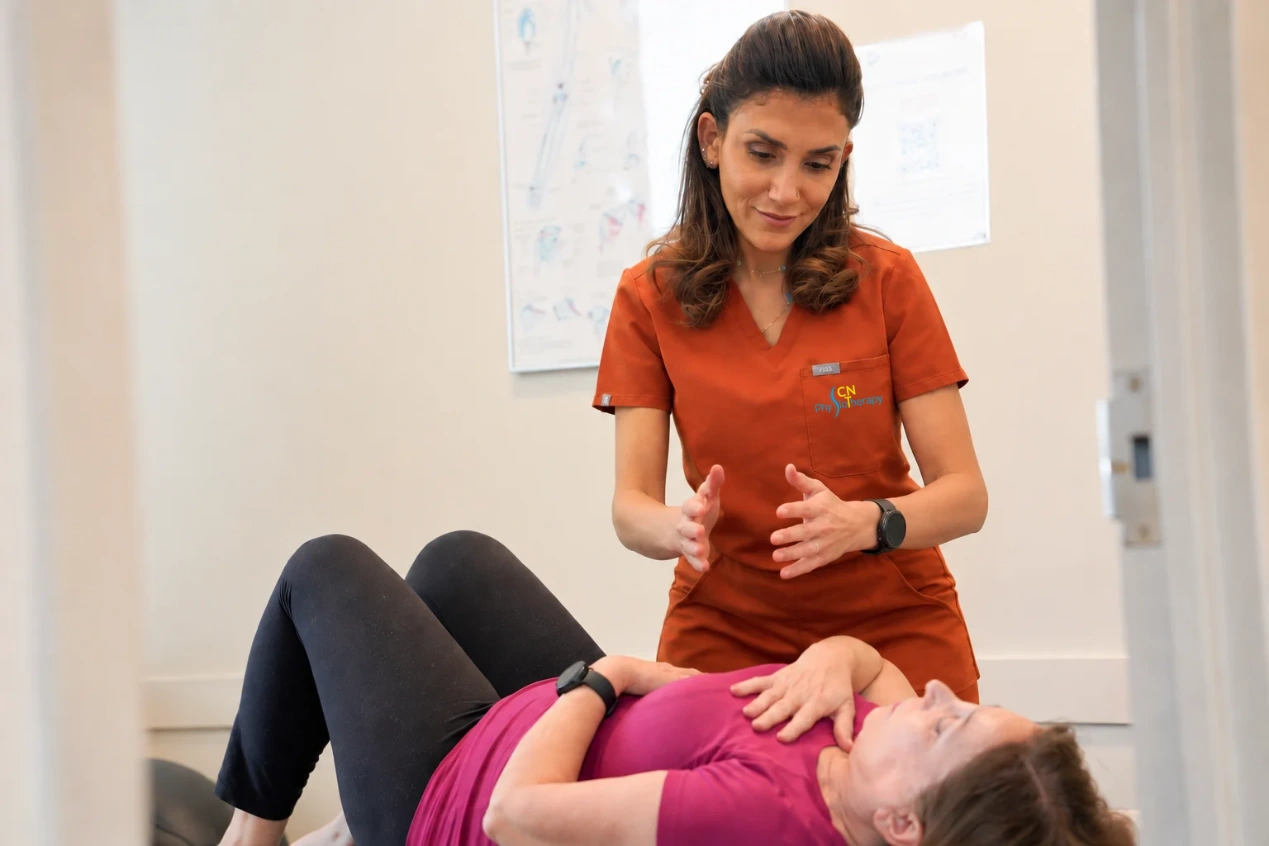
Physiotherapy focuses on helping you understand your symptoms and improve your ability to move.
Your treatment plan may include several approaches.
Therapeutic Exercise
Therapeutic exercise is often a major part of lower-back rehabilitation.
Exercises are selected based on your movement, strength, symptoms, and functional goals.
Over time, your program can become progressively more challenging as your capacity improves.
Manual Therapy
Manual therapy may be incorporated when appropriate.
A physiotherapist may use hands-on techniques to help address mobility restrictions and improve movement.
Manual therapy is generally most useful when combined with active rehabilitation.
McKenzie Method
CN Physiotherapy also offers the McKenzie Method for assessing and treating pain involving the spine and extremities.
This approach uses a mechanical assessment to examine how symptoms respond to different movements and positions.
For some patients with lower-back or leg symptoms, this can provide useful information when developing a treatment plan.
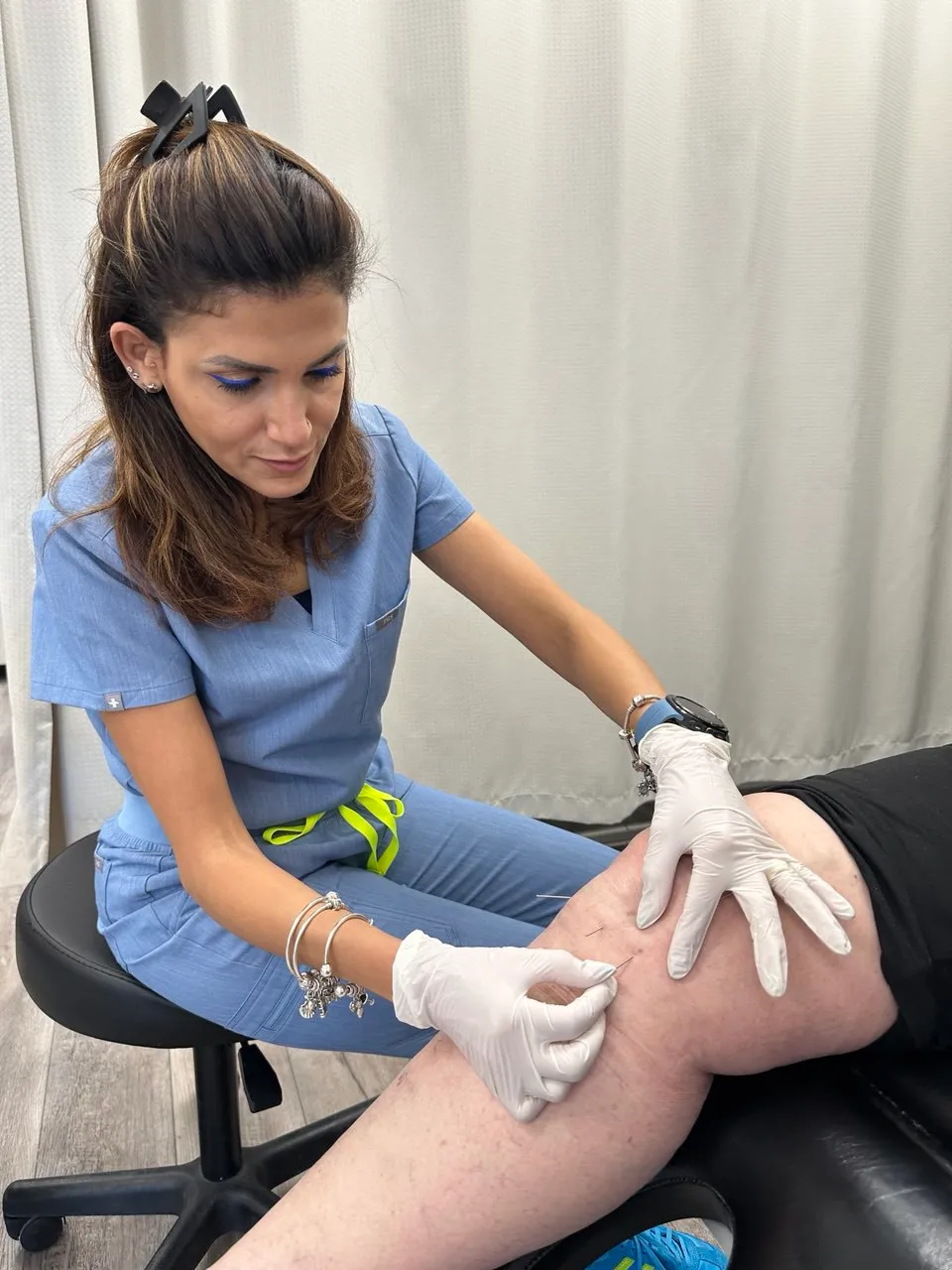
Dry Needling
Dry needling may be incorporated into physiotherapy for certain musculoskeletal problems.
It may help address muscle tension and pain in appropriate patients.
Your physiotherapist will determine whether it is relevant to your individual condition.
Ergonomic Rehab
If your back pain is aggravated by your workplace or home office, ergonomic rehabilitation may be helpful.
This can involve evaluating your desk setup, work habits, body mechanics, and daily movement.
Simple modifications can sometimes make your workday much more comfortable.
When Should I See a Physiotherapist for Lower Back Pain?
You do not necessarily need to wait until your back pain becomes severe.
Consider booking a physiotherapy assessment if:
- Pain has persisted beyond several days or weeks
- Symptoms keep returning
- Back pain is limiting your work
- You are avoiding exercise
- You have difficulty bending or lifting
- Sitting or standing is becoming increasingly uncomfortable
- You experience pain travelling into your leg
- You are experiencing stiffness or weakness
- Pain is interfering with sleep
- You are unsure which exercises are safe
Early assessment may help you understand your symptoms before they begin controlling your daily routine.
When Should You Seek Medical Attention Instead?
Most lower back pain is not an emergency.
However, certain symptoms require prompt medical evaluation.
Seek urgent medical attention if you develop symptoms such as:
- New loss of bladder or bowel control
- Numbness around the groin or saddle area
- Rapidly worsening weakness
- Significant neurological changes
- Severe pain following major trauma
- Unexplained fever with severe back pain
- Other unusual or rapidly worsening symptoms
Australia’s government-supported Healthdirect guidance on low back pain also explains when back pain symptoms require urgent assessment.
If you are uncertain whether your symptoms are appropriate for physiotherapy, a healthcare professional can help determine the safest next step.
Do I Need an X-Ray or MRI Before Physiotherapy?
Not always.
Many patients begin physiotherapy without imaging. The patient-friendly low back pain criteria from the American College of Radiology and Radiological Society of North America explain that most people with low back pain and no complicating factors do not require imaging tests.
Your healthcare provider can determine whether an X-ray, MRI, or other test is appropriate based on your symptoms, history, and examination.
If you already have imaging or medical reports, bring them with you to your physiotherapy appointment.
Can Physiotherapy Prevent Back Pain From Returning?
No treatment can guarantee that you will never experience back pain again.
However, physiotherapy can help improve strength, mobility, confidence, and understanding of your condition.
It can also teach you how to respond if symptoms begin returning.
This is important because many patients become anxious when they feel the first sign of pain.
Knowing which movements and exercises are appropriate can make future flare-ups easier to manage.
Back Pain and Lifting
Many people with back pain become afraid of lifting.
But lifting is part of normal life.
You may need to lift:
- Groceries
- Children
- Laundry
- Tools
- Sports equipment
- Work materials
- Household objects
Rather than avoiding lifting forever, rehabilitation can gradually rebuild your ability to lift safely and confidently. For occupational lifting, the U.S. National Institute for Occupational Safety and Health provides an evidence-based tool for evaluating the physical demands and risks associated with two-handed lifting tasks.
Your physiotherapist may assess your technique, strength, mobility, and overall physical capacity.
Back Pain and Gardening in Orléans
Gardening is a common source of back soreness because it often involves repeated bending, kneeling, lifting, twisting, and carrying.
After a long Ottawa winter, people sometimes spend several hours gardening during the first warm weekend.
Your back may not be prepared for that sudden workload.
Consider gradually increasing the amount of time you spend gardening and taking breaks throughout the day.
If pain continues, physiotherapy can help determine whether there are movement or strength factors worth addressing.
Back Pain and Snow Shovelling
Snow shovelling places significant physical demands on the body.
Repetitive lifting, pushing, twisting, and working in slippery conditions can aggravate the lower back.
Try to avoid waiting until a large amount of heavy snow has accumulated.
Where possible, shovel smaller amounts more frequently and avoid repeatedly twisting while holding a loaded shovel.
If shovelling consistently causes back pain, your physiotherapist can assess your movement and strength.
Lower Back Pain in Active Adults
Back pain does not only affect sedentary people.
Runners, cyclists, hockey players, golfers, skiers, gym members, and recreational athletes can also experience symptoms.
Returning to sport requires more than simply reducing pain.
Your rehabilitation should prepare you for the actual physical demands of your activity.
This may include:
- Strength
- Power
- Endurance
- Mobility
- Balance
- Sport-specific movements
Your physiotherapist can gradually progress your program as symptoms improve.
How Long Does Lower Back Pain Take to Improve?
Recovery time varies considerably.
Some episodes improve within days.
Others may take several weeks or longer.
Factors affecting recovery may include:
- Severity of symptoms
- Duration of pain
- Presence of nerve symptoms
- Strength
- General health
- Activity level
- Work demands
- Previous episodes
- Consistency with rehabilitation
Be cautious of anyone guaranteeing that every case of lower back pain can be resolved within a fixed number of sessions.
Individualized care is more realistic.
What Happens During a Physiotherapy Assessment?
Your initial assessment is designed to understand your symptoms and goals.
Your physiotherapist may ask:
- When did the pain start?
- Was there an injury?
- Where do you feel the pain?
- Does pain travel into your leg?
- What makes your symptoms better?
- What makes them worse?
- What is your occupation?
- What activities do you want to return to?
- Have you experienced back pain before?
The physical assessment may include:
- Spinal movement
- Hip movement
- Strength testing
- Neurological screening
- Balance
- Walking
- Functional movement
- Lifting or bending assessment when appropriate
Your treatment plan will then be based on these findings.
Frequently Asked Questions About Lower Back Pain
Can physiotherapy help lower back pain?
Physiotherapy can help many people experiencing musculoskeletal lower back pain by improving movement, strength, function, activity tolerance, and confidence. Treatment recommendations depend on your specific assessment.
How soon should I see a physiotherapist?
You may consider an assessment if pain is persistent, recurring, worsening, or limiting work, exercise, sleep, or daily activity. You do not necessarily need to wait several months before seeking help.
Should I stretch my lower back?
Stretching may be helpful for some people but may aggravate others. The right exercises depend on what appears to be contributing to your symptoms.
Should I use heat or ice?
Some patients find heat or cold temporarily comfortable. Neither is appropriate for every condition, and these strategies should generally be viewed as symptom-management tools rather than complete treatment plans.
Is sitting bad for lower back pain?
Sitting itself is not automatically harmful. Remaining in one position for a prolonged period may aggravate symptoms in some people. Regular movement and position changes may help.
Can a bad mattress cause back pain?
Sleep position and mattress comfort can influence how you feel, but persistent back pain usually deserves a broader assessment rather than assuming the mattress is the only cause.
Is lower back pain always caused by a disc?
No. Muscle strains, joints, nerve irritation, activity changes, strength, mobility, and several other factors may contribute to symptoms.
Can lower back pain cause leg pain?
Yes. Certain spinal or nerve-related conditions may cause symptoms that extend into the buttock or leg. This may include sciatica.
Is walking better than resting?
For many uncomplicated cases, appropriate activity is preferred over prolonged bed rest. However, your activity level should reflect your symptoms and clinical presentation.
Can I still go to the gym with lower back pain?
Possibly. Many patients can continue exercising with modifications. A physiotherapist can help determine which movements are appropriate and how to progressively return to your normal training.
Can manual therapy fix my back?
Manual therapy may help some patients improve movement and comfort, but long-term rehabilitation commonly includes active components such as exercise and progressive strengthening.
Do I need a doctor’s referral for physiotherapy?
In many situations, patients can contact a physiotherapy clinic directly. Insurance requirements vary, so check your individual plan if reimbursement is important.
How CN Physiotherapy Can Help
If lower back pain is interfering with your daily routine, you do not have to simply wait and hope it disappears.
At CN Physiotherapy, our physiotherapists focus on understanding your symptoms, identifying factors that may be contributing to your pain, and creating a personalized treatment plan.
Depending on your assessment, treatment may involve:
- Physiotherapy
- Therapeutic exercise
- Manual therapy
- McKenzie Method
- Dry needling
- Ergonomic rehabilitation
- Strength and mobility training
Our goal is not simply to reduce discomfort temporarily.
We want to help you restore movement, improve confidence, and return to the activities that are important to you.
We proudly help patients from Orléans, Fallingbrook, Navan, Cumberland, Blackburn Hamlet, Beacon Hill, Ottawa, Nepean, and surrounding communities.
Take the Next Step Toward Moving More Comfortably
Lower back pain can interfere with almost every part of your day, but it does not necessarily mean you should stop moving or give up the activities you enjoy.
A physiotherapy assessment can help you better understand what may be contributing to your symptoms and create a structured path forward.
If you are experiencing lower back pain in Orléans or the Ottawa area, contact CN Physiotherapy to request an appointment.
Whether your goal is to sit comfortably at work, return to the gym, walk farther, garden, play sports, lift safely, or simply get through your day with less discomfort, our physiotherapy team is here to help.
Your recovery can start today.
Request an appointment with CN Physiotherapy.