Dry needling is increasingly used in physiotherapy to help manage muscle pain, stiffness, trigger points, and movement restrictions. Although the treatment involves thin needles, it is not the same as receiving an injection, and it is not simply another name for acupuncture.
For people living with chronic headaches, neck pain, back pain, sports injuries, jaw discomfort, or persistent muscle tension, dry needling may be included as part of a broader physiotherapy treatment plan.
At CN Physiotherapy, dry needling may be considered after a detailed assessment of your symptoms, movement, strength, and medical history. The goal is not to treat every painful condition with needles. It is to determine whether dry needling could help reduce discomfort and make active rehabilitation more effective.
We provide physiotherapy services for patients across Ottawa, Orléans, Fallingbrook, Navan, Blackburn Hamlet, Beacon Hill, Cumberland, Nepean, and surrounding communities.
What Is Dry Needling?
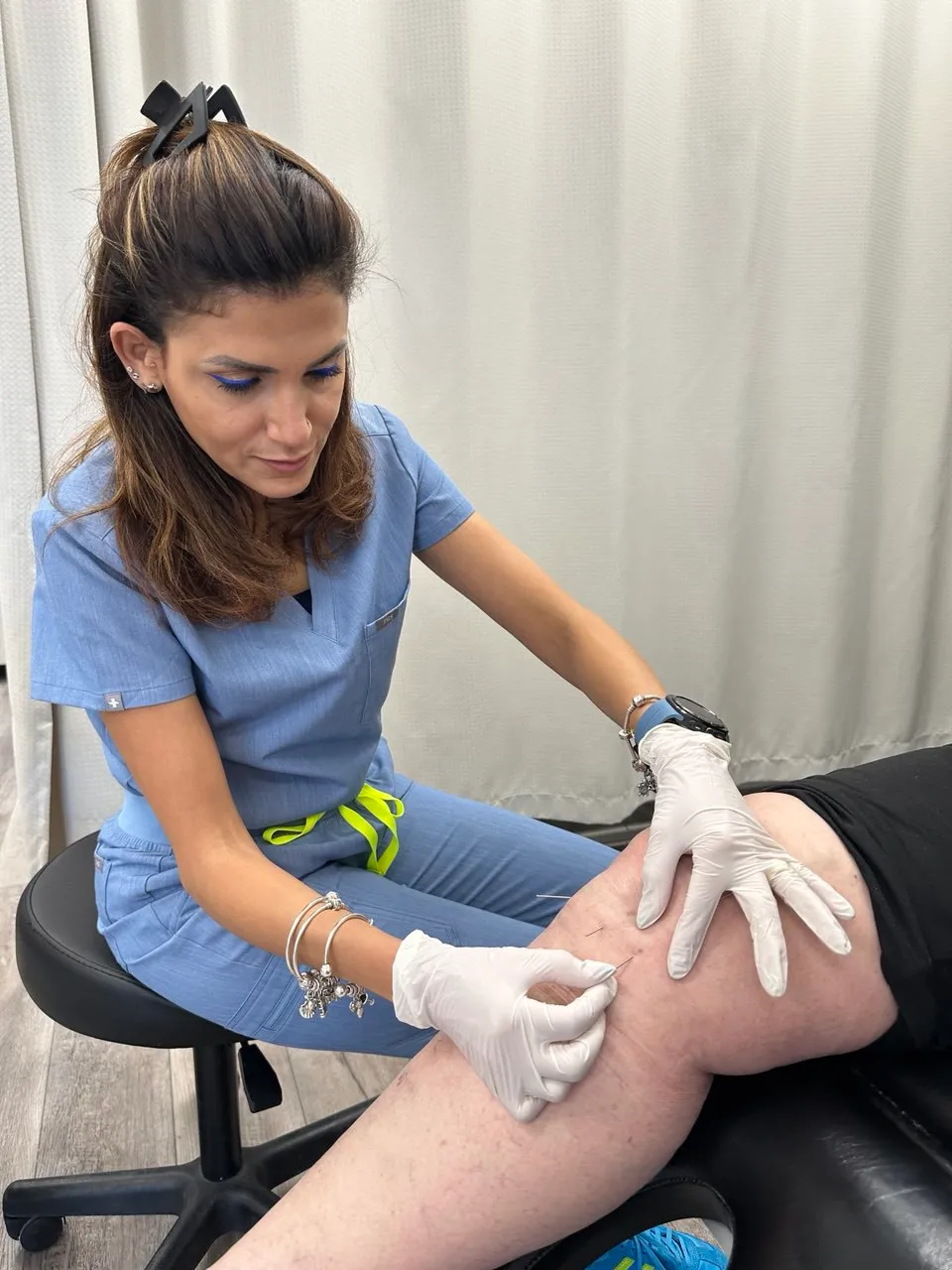
Dry needling is a treatment technique in which a trained healthcare provider inserts a very thin, sterile needle into or near a sensitive area of muscle.
These sensitive areas are often called myofascial trigger points. A trigger point may feel like a small, tight, or tender area within a muscle. Pressing on it may cause pain locally or refer discomfort somewhere else in the body.
The word “dry” means that no medication or other substance is injected. The needle itself is used to stimulate the targeted tissue. Dry needling is commonly included as one part of a larger rehabilitation plan that may also involve exercise, stretching, manual therapy, and movement retraining. (Cleveland Clinic)
What Is a Trigger Point?
A trigger point is a sensitive area within a muscle that may develop because of:
- Repetitive movement
- Muscle overload
- Poor posture
- Injury
- Stress
- Reduced movement
- Protective muscle tension
Trigger points may contribute to stiffness, weakness, discomfort, and reduced range of motion.
For example, a trigger point in the upper shoulder may cause pain around the neck or head. A trigger point around the hip may contribute to discomfort in the lower back or leg.
However, not every painful area is a trigger point. Pain may also be caused by a joint, tendon, ligament, nerve, disc, or medical condition. This is why dry needling should be recommended only after a proper assessment.
How Does Dry Needling Work?
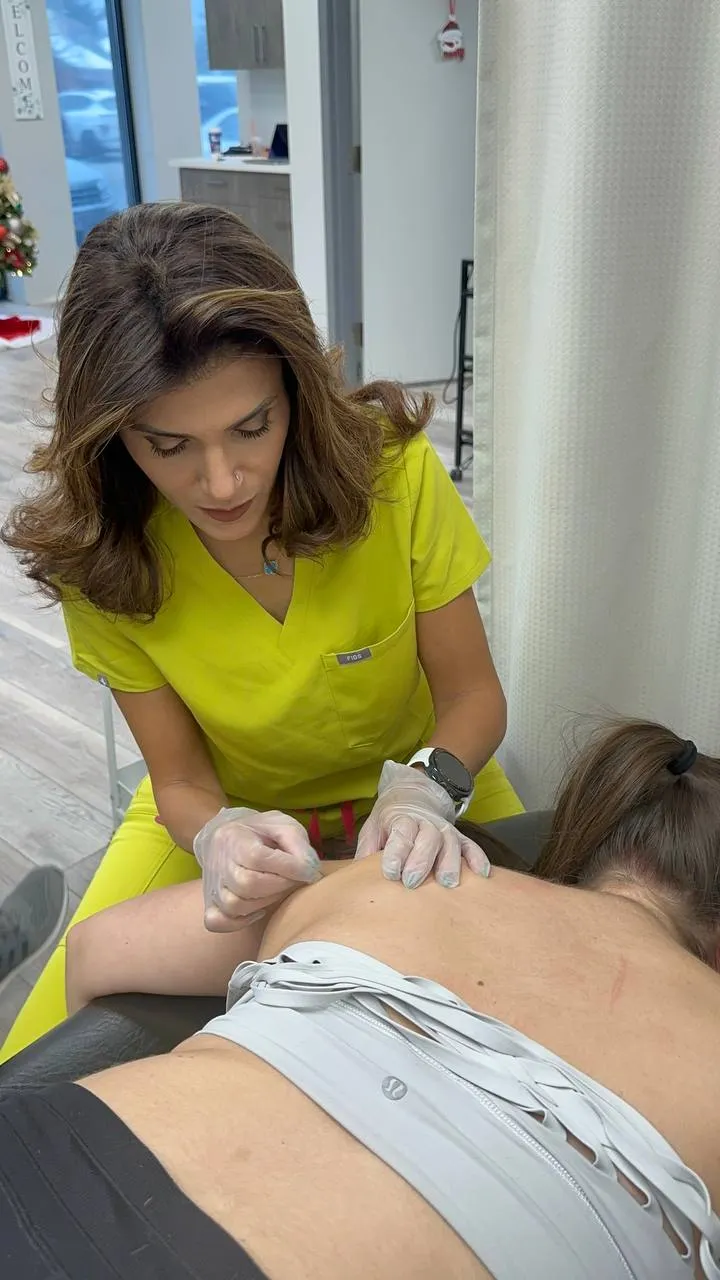
During treatment, the physiotherapist identifies the area contributing to pain or restricted movement. A sterile needle is then carefully inserted into or near the targeted muscle tissue.
The needle may be inserted superficially or more deeply depending on the treatment area, anatomy, and clinical goal. In some cases, the physiotherapist may gently move the needle to produce a brief muscle contraction known as a local twitch response.
This response may feel like a quick jump or cramp in the muscle.
Dry needling may help by:
- Reducing muscle tightness
- Improving local circulation
- Decreasing trigger-point sensitivity
- Improving range of motion
- Reducing local or referred pain
- Making movement and exercise more comfortable
Some people notice an immediate change in movement or discomfort, while others require more than one treatment before noticing improvement. (Cleveland Clinic)
Is Dry Needling the Same as Acupuncture?
No. Although both treatments use thin needles, dry needling and acupuncture are based on different clinical approaches.
Dry needling is generally used to address musculoskeletal pain, muscle tension, trigger points, and movement problems. The treatment location is selected according to physical examination findings, anatomy, pain patterns, and movement limitations.
Acupuncture is based on traditional Chinese medicine and may be used for a broader range of health concerns.
The needles may appear similar, but the reasoning behind where and why they are placed is different. (Cleveland Clinic)
What Conditions May Be Treated With Dry Needling?
Dry needling may be considered for several musculoskeletal conditions. Whether it is appropriate depends on the source of the symptoms and the findings of your physiotherapy assessment.
Common examples include:
Neck Pain
Muscular trigger points in the neck and upper shoulders may contribute to stiffness, headaches, and discomfort during desk work, driving, or sleeping.
Dry needling may be used to reduce muscle sensitivity before beginning mobility or strengthening exercises.
Back Pain
Some lower-back pain is associated with muscular tension or myofascial trigger points.
Dry needling may help reduce discomfort and improve movement, but it is usually combined with exercises that address strength, mobility, and movement habits.
Headaches
Certain tension-type headaches may be influenced by tight or sensitive muscles around the neck, shoulders, and head.
A physiotherapist must assess the headache carefully before recommending treatment because headaches can have many causes.
Jaw Pain
Jaw pain and temporomandibular joint symptoms may involve muscular tension around the jaw, face, and neck.
Dry needling may be considered when muscle trigger points contribute to symptoms.
Tennis Elbow and Golfer’s Elbow
Pain around the elbow may involve irritated tendons as well as overworked forearm muscles.
Dry needling may help reduce muscular tension, but tendon rehabilitation often requires progressive strengthening and load management.
Shoulder Pain
Trigger points in the shoulder muscles may contribute to pain and restricted movement.
Dry needling may be used as part of treatment for certain cases of rotator cuff-related pain, muscular tension, or movement dysfunction.
Hip Pain
Sensitive muscles around the hip and buttock may contribute to discomfort during walking, sitting, running, or climbing stairs.
Sports and Overuse Injuries
Athletes may develop trigger points because of repetitive training, fatigue, or sudden changes in activity.
Dry needling may help reduce muscle tension so the patient can participate more effectively in rehabilitation exercises.
Healthcare sources also describe dry needling as a possible treatment for pain and movement concerns involving tendon irritation, migraines, tension-type headaches, whiplash, repetitive motion disorders, and some joint or spinal problems. (Cleveland Clinic)
What Happens During a Dry Needling Appointment?
Before performing dry needling, your physiotherapist will review your symptoms, medical history, medications, and treatment goals.
The physiotherapist may assess:
- Range of motion
- Muscle strength
- Trigger-point sensitivity
- Joint movement
- Nerve symptoms
- Functional limitations
- Posture
- Activities that reproduce pain
If dry needling is considered suitable, the physiotherapist will explain the procedure and obtain your consent.
The treatment area is cleaned, and single-use sterile needles are used. Depending on the condition, one or more muscles may be treated.
You may be asked to sit, lie on your back, lie on your side, or lie face down. The position depends on the muscle being treated.
The dry needling portion of the appointment may be relatively brief. It may then be followed by stretching, strengthening, manual therapy, or movement exercises.
Does Dry Needling Hurt?
The experience varies from person to person.
Some patients barely feel the needle enter the skin. Others notice a small prick or pressure.
When the needle reaches a sensitive trigger point, you may feel:
- A quick twitch
- A brief cramp
- An aching sensation
- Pressure
- A short electric-like feeling
The sensation should be temporary. Your physiotherapist can modify or stop the treatment if you are uncomfortable.
It is normal to feel some muscle soreness after treatment. Cleveland Clinic notes that soreness may last approximately 24 to 36 hours, and mild bruising may also occur. (Cleveland Clinic)
What Should You Expect After Treatment?
After dry needling, you may notice:
- Temporary soreness
- Mild stiffness
- A heavy feeling in the muscle
- Small bruises
- Improved movement
- Reduced pain
- Temporary fatigue
Your physiotherapist may encourage gentle movement and hydration after treatment.
You should follow the specific instructions provided at your appointment. Avoid assuming that more stretching or intense exercise is always better. The treated tissue may need time to settle before heavy activity.
What Are the Benefits of Dry Needling?
Potential benefits may include:
- Reduced muscle tension
- Improved range of motion
- Reduced local pain
- Reduced referred pain
- Improved flexibility
- Better tolerance of exercise
- Improved ability to participate in rehabilitation
The most important benefit may be that reduced pain allows the patient to move and exercise more effectively.
Dry needling should not replace active rehabilitation. It is generally most useful when it supports a larger plan aimed at restoring strength, control, mobility, and function. ChoosePT describes dry needling as a technique that is typically used within a broader physical therapy treatment program. (choosept.com)
What Are the Risks and Side Effects?
Most side effects are minor, but dry needling is still an invasive treatment and must be performed by someone with appropriate training.
Common side effects may include:
- Soreness
- Bruising
- Mild bleeding
- Fatigue
- Temporary stiffness
- Lightheadedness
Less common risks include infection or injury to surrounding structures.
Serious complications are rare, but needling near the chest carries a small risk of pneumothorax, or collapsed lung. Seek urgent medical attention if you develop shortness of breath, chest pain, or significant difficulty breathing after treatment near the chest or upper back. (Cleveland Clinic)
Who May Not Be a Good Candidate?
Dry needling may not be appropriate for everyone.
Your physiotherapist may avoid treatment or request medical clearance if you:
- Are pregnant
- Take blood-thinning medication
- Have a compromised immune system
- Recently had surgery
- Have an active infection
- Have significant needle anxiety
- Are unable to understand or consent to the procedure
- Have a bleeding disorder
- Have certain medical implants or health conditions
These factors do not always mean treatment is impossible, but they must be discussed before beginning.
How Many Sessions Are Needed?
There is no standard number of dry needling sessions that works for every patient.
The number of treatments depends on:
- The condition being treated
- How long symptoms have been present
- The number of areas involved
- Your overall health
- Your response to the first treatment
- Whether you complete the prescribed exercises
- The underlying cause of the pain
Some patients notice improvement after one session. Others may need several appointments combined with exercise-based rehabilitation.
If dry needling is not producing meaningful improvement, the treatment plan should be reassessed rather than continued indefinitely.
Can Dry Needling Replace Exercise?
No. Dry needling may reduce pain or muscle tension, but it does not replace strengthening, mobility training, or movement retraining.
For example, if poor shoulder-blade strength contributes to neck pain, dry needling may temporarily reduce tension. However, the symptoms may return unless strength and posture are also addressed.
Similarly, dry needling may reduce calf tightness in a runner, but it will not correct training errors, weakness, poor running mechanics, or inadequate recovery.
The most effective plan usually combines symptom relief with active rehabilitation.
Dry Needling vs. Massage Therapy
Both treatments may help reduce muscular tension, but they work differently.
Massage therapy uses hands-on pressure and movement to treat soft tissue.
Dry needling uses a thin needle to target trigger points that may be difficult to reach manually.
Some patients respond better to one approach than the other. In other cases, both may be used at different stages of recovery.
A physiotherapist will determine whether dry needling, manual therapy, exercise, or another treatment is most appropriate.
How CN Physiotherapy Uses Dry Needling
At CN Physiotherapy, dry needling is not provided as a stand-alone quick fix.
Treatment begins with a physiotherapy assessment to determine why the pain is occurring and whether trigger points or muscular tension are contributing.
If dry needling is appropriate, it may be combined with:
- Therapeutic exercise
- Manual therapy
- Mobility training
- Strengthening
- Postural correction
- Activity modification
- Home exercises
- Return-to-work or return-to-sport planning
We serve patients throughout Ottawa, Orléans, Fallingbrook, Navan, Blackburn Hamlet, Beacon Hill, Cumberland, Nepean, and surrounding communities.
Frequently Asked Questions
Is dry needling safe?
Dry needling is generally considered low risk when performed by a properly trained healthcare provider using sterile, single-use needles. Minor soreness and bruising are the most common side effects. (Cleveland Clinic)
Will I bleed during dry needling?
A small amount of bleeding may occasionally occur at the insertion site. It is usually minor and stops quickly.
Can dry needling make pain worse?
Temporary soreness may occur after treatment. Severe or worsening pain should be reported to your physiotherapist.
Can I exercise after dry needling?
Gentle movement is often encouraged, but intense exercise may need to be modified depending on the area treated and your symptoms. Follow your physiotherapist’s advice.
Is dry needling good for sciatica?
Dry needling may help if muscular tension contributes to symptoms, but true sciatica involves irritation of a nerve root. Treatment should address the underlying nerve and spinal factors, not only muscle tightness.
Can dry needling help headaches?
It may help certain tension-type or neck-related headaches when trigger points contribute. Headaches should first be assessed to rule out other causes.
Is dry needling covered by insurance?
Coverage varies between insurance plans. Patients should confirm whether dry needling is included under their physiotherapy benefits.
Do the needles contain medication?
No. Dry needling uses solid needles without medication or injection.
Is dry needling suitable for chronic pain?
It may be helpful for some chronic musculoskeletal pain conditions, but it should be combined with an appropriate rehabilitation plan.
Do I need a referral?
Referral requirements vary according to your insurance plan and personal circumstances. Contact the clinic or review your coverage before booking.
Is Dry Needling Right for You?
Dry needling may be a useful treatment for muscle tension, trigger points, pain, and movement restrictions, but it is not appropriate for every patient or every condition.
The best way to determine whether it may help is through a complete physiotherapy assessment.
If muscular pain, headaches, neck tension, back discomfort, sports injuries, or restricted movement are affecting your daily routine, contact CN Physiotherapy to request an appointment. Our physiotherapists can evaluate your condition, explain your treatment options, and create a personalized rehabilitation plan designed to help you move with greater comfort and confidence.