Tennis elbow is one of the most misleadingly named musculoskeletal conditions. Despite what the name suggests, you do not need to play tennis—or any sport at all—to develop it.
The condition commonly affects people whose work, hobbies, or daily routines involve repeated gripping, lifting, twisting, typing, or wrist movement. It may appear gradually after weeks or months of activity, or it may begin suddenly after an unusually demanding task.
For adults living in Ottawa, Orléans, Fallingbrook, Navan, Blackburn Hamlet, Beacon Hill, Cumberland, Nepean, and surrounding communities, tennis elbow can interfere with everything from computer work and home renovations to cooking, gardening, exercise, and childcare.
At CN Physiotherapy, we help patients understand what is causing their elbow pain and create personalized treatment plans designed to restore strength, reduce discomfort, and improve everyday function.
What Is Tennis Elbow?
Tennis elbow is a painful tendon condition affecting the outside of the elbow. It is also known as lateral epicondylitis or lateral elbow tendinopathy.
The forearm muscles that extend your wrist and fingers attach to a bony area on the outer elbow. Repeatedly loading these muscles can irritate or gradually change the tendon where it attaches to the bone.
Pain may remain near the elbow or travel into the forearm and wrist. Weakness can also make simple actions such as gripping a coffee cup, turning a doorknob, shaking hands, or lifting groceries uncomfortable. (Mayo Clinic)
Although the term “epicondylitis” suggests inflammation, long-standing tennis elbow often involves tendon breakdown and reduced tolerance to load rather than inflammation alone. This is one reason why rest may reduce symptoms temporarily without fully solving the problem.
Why Is It Called Tennis Elbow?
The name became associated with the condition because repetitive backhand movements and unsuitable racquet technique can place stress on the forearm tendons.
However, most people who develop tennis elbow do not play tennis. Repeated use of the hand, wrist, and forearm during work or hobbies can create the same type of tendon overload. (Mayo Clinic)
Tennis is simply one possible cause among many.
Who Can Develop Tennis Elbow?
Anyone who frequently grips, carries, lifts, twists, or moves the wrist against resistance may develop symptoms.
People whose work or activities may place them at risk include:
- Painters
- Plumbers
- Carpenters
- Electricians
- Construction workers
- Gardeners
- Cooks
- Mechanics
- Office workers
- Musicians
- Hairdressers
- Cleaners
- Warehouse workers
- Racquet-sport players
- Weightlifters
Even frequent computer mouse use may contribute when combined with poor positioning, prolonged activity, and limited recovery time. (Mayo Clinic)
The condition is especially common among adults between approximately 30 and 60 years of age, although it can affect people outside that range. (Mayo Clinic)
What Causes Tennis Elbow?
Tennis elbow usually develops when the tendon is exposed to more force than it can currently tolerate.
This may happen because of repetitive activity, poor technique, inadequate recovery, sudden increases in workload, or weakness in the forearm and supporting muscles.
Common triggers include:
- Painting several rooms
- Using a screwdriver repeatedly
- Carrying heavy bags
- Lifting objects with the palm facing downward
- Gardening for several hours
- Starting a new weight-training program
- Playing more tennis or pickleball than usual
- Repeatedly using hand tools
- Long periods of computer work
- Returning to physical work after time away
Sometimes there is no obvious single cause. Symptoms may build gradually as small amounts of stress accumulate over time.
Common Symptoms of Tennis Elbow
The most recognizable symptom is pain or tenderness on the outside of the elbow.
You may also notice:
- Pain extending into the forearm
- Weak grip strength
- Discomfort while lifting
- Pain when twisting the wrist
- Difficulty opening jars
- Pain while using tools
- Discomfort when shaking hands
- Pain when holding a cup or kettle
- Stiffness around the elbow
- Reduced confidence using the arm
Symptoms may be mild at first and appear only during certain activities. Without appropriate management, they may eventually affect work, exercise, sleep, and household tasks.
Tennis Elbow vs. Golfer’s Elbow
Tennis elbow affects the tendons on the outside of the elbow.
Golfer’s elbow affects the tendons on the inside of the elbow.
Both conditions may develop from repetitive gripping and wrist movement, and neither requires participation in the sport named after it.
The location of the pain and the movements that aggravate it help distinguish between the two conditions.
Is Every Outer-Elbow Pain Tennis Elbow?
No. Several conditions can cause pain around the outside of the elbow.
These include:
- Joint irritation
- Nerve compression
- Neck-related nerve symptoms
- Ligament injuries
- Referred shoulder pain
- Arthritis
- Fractures
- Other tendon injuries
A proper physiotherapy assessment is important, especially when pain is accompanied by numbness, tingling, significant swelling, trauma, or loss of movement.
How Is Tennis Elbow Diagnosed?
A healthcare professional can often diagnose tennis elbow using your medical history and a physical examination. Imaging is not always necessary unless another condition is suspected or symptoms are unusually persistent. (Mayo Clinic)
During a physiotherapy assessment, your physiotherapist may examine:
- The location of tenderness
- Grip strength
- Wrist movement
- Elbow mobility
- Forearm strength
- Pain during resisted wrist movements
- Neck and shoulder function
- Work or sport technique
- Activities that reproduce symptoms
The assessment should look beyond the painful tendon. Weakness or movement limitations in the shoulder, upper back, or wrist may also increase the amount of force placed on the elbow.
Why Complete Rest May Not Be Enough
When elbow pain develops, avoiding the aggravating activity can help settle an irritated tendon. However, complete rest for an extended period may reduce strength and make the tendon less prepared for future activity.
The tendon may feel better while resting but become painful again as soon as lifting, gripping, or work resumes.
Successful recovery usually requires a balance between reducing excessive load and gradually rebuilding the tendon’s ability to tolerate force.
This is why simply waiting for the pain to disappear does not always produce lasting results.
How Physiotherapy Helps Tennis Elbow
Physiotherapy treatment focuses on relieving symptoms while improving the tendon’s strength and tolerance.
Your treatment plan may include several approaches.
Activity Modification
You may need to temporarily reduce or change specific tasks.
This does not always mean stopping work, exercise, or hobbies completely. Your physiotherapist may recommend changing how often you perform an activity, how much weight you lift, or how you position your wrist.
Progressive Strengthening
Strengthening is one of the most important parts of tendon rehabilitation.
Exercises may focus on the wrist extensors, forearm muscles, grip, shoulder, and upper back. The amount of resistance is gradually increased as the tendon adapts.
Physical therapy commonly includes exercises designed to strengthen the muscles and tendons of the forearm. (Mayo Clinic)
Manual Therapy
Hands-on techniques may be used to improve movement, reduce soft-tissue tension, and make exercise more comfortable.
Manual therapy is usually combined with strengthening rather than provided as the only treatment.
Ergonomic Changes
If your symptoms are related to office work or repetitive tasks, your physiotherapist may assess:
- Desk height
- Mouse placement
- Wrist position
- Tool grip
- Workstation setup
- Frequency of breaks
- Repetitive work technique
Small adjustments can reduce repeated stress on the tendon.
Bracing or Taping
A forearm strap or brace may temporarily reduce stress on the painful tendon during certain activities. It should not replace exercise, but it may help make daily tasks more manageable. (Mayo Clinic)
Shockwave Therapy
Shockwave Therapy may be considered for persistent tendon pain that has not responded adequately to exercise and activity modification.
The treatment delivers acoustic waves into the affected tissue and may help reduce pain while encouraging a healing response. It is generally used as part of a broader physiotherapy plan rather than as a stand-alone solution. (Mayo Clinic)
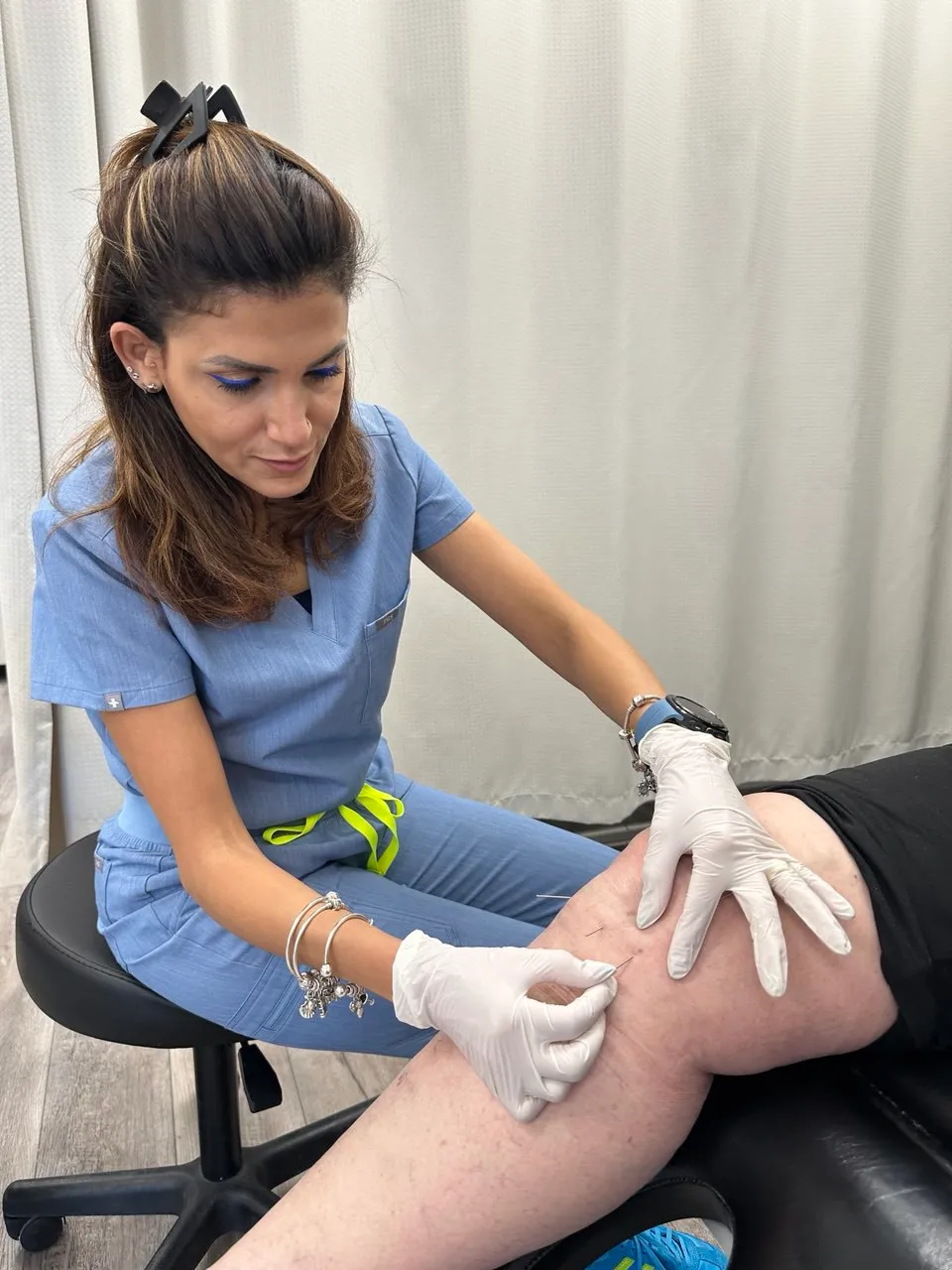
Dry Needling
Dry needling may be considered when muscle tension or trigger points in the forearm are contributing to symptoms.
The treatment may help reduce discomfort and improve movement, but the tendon still needs progressive strengthening and appropriate load management.
What Can You Do at Home?
Your home strategy should be based on your individual assessment, but several general principles may help.
Temporarily reduce activities that cause a strong increase in pain. Avoid repeatedly testing the elbow by gripping or lifting heavy objects throughout the day.
When carrying something, keeping the wrist closer to a neutral position may reduce stress on the tendon.
Using both hands for heavier objects can also help.
Cold therapy may provide temporary comfort after aggravating activity, although it does not replace rehabilitation.
Most importantly, follow your prescribed exercise program consistently. Tendons usually improve through gradual, repeated loading rather than occasional intense exercise.
How Long Does Tennis Elbow Take to Heal?
Recovery time varies.
A mild, recently developed condition may improve within several weeks. Symptoms that have been present for months may require a longer rehabilitation period.
Recovery depends on:
- How long you have had symptoms
- The amount of strain placed on the elbow
- Your work demands
- Participation in rehabilitation
- General health
- Previous injuries
- Whether contributing weaknesses are addressed
Tendon recovery is often gradual. Pain may improve before full strength returns, so returning immediately to heavy gripping or lifting may cause another flare-up.
Can Tennis Elbow Return?
Yes. Symptoms may return if the original contributing factors are still present.
Common reasons include:
- Increasing workload too quickly
- Stopping exercises as soon as pain improves
- Poor lifting technique
- Inadequate shoulder or forearm strength
- Repeating aggravating activities without breaks
- Returning to sport before the tendon is ready
A successful rehabilitation plan should prepare you for the actual demands of your work, sport, or daily routine.
When Should You Seek Help?
Consider booking a physiotherapy assessment when:
- Pain lasts longer than one or two weeks
- Symptoms repeatedly return
- Your grip feels weaker
- Pain interferes with work
- You struggle to lift everyday objects
- Rest has not solved the problem
- You are uncertain whether the pain is coming from the tendon, joint, or nerve
Seek prompt medical attention after a sudden injury accompanied by a snapping sound, severe swelling, bruising, deformity, or major loss of movement. Persistent pain at rest, worsening redness, or increasing swelling should also be medically assessed.
How CN Physiotherapy Can Help
At CN Physiotherapy, we begin with a detailed assessment of your elbow, wrist, grip, shoulder, neck, and activity demands.
Your treatment may include:
- Progressive strengthening
- Manual therapy
- Ergonomic recommendations
- Activity modification
- Dry needling
- Shockwave Therapy
- Taping or bracing guidance
- A gradual return-to-work or return-to-sport plan
We help patients throughout Ottawa, Orléans, Fallingbrook, Navan, Blackburn Hamlet, Beacon Hill, Cumberland, Nepean, and nearby communities recover from persistent elbow pain.
Frequently Asked Questions
Can I have tennis elbow without playing tennis?
Yes. Most cases are connected to repeated wrist, hand, or forearm activity rather than tennis itself.
Should I stop using my arm completely?
Usually not. Temporary activity modification may be needed, but complete rest can lead to weakness. A gradual strengthening plan is generally more useful.
Can tennis elbow heal on its own?
Some cases improve with time and reduced strain. Persistent or recurring symptoms may require physiotherapy and progressive rehabilitation.
Is tennis elbow caused by inflammation?
Early symptoms may involve inflammation, but chronic cases often involve longer-term tendon changes and reduced tolerance to load.
Can typing cause tennis elbow?
Typing alone may not always be the cause, but prolonged computer work, repeated mouse use, poor positioning, and limited breaks may contribute.
Is massage enough to treat tennis elbow?
Massage may reduce muscle tension temporarily, but lasting recovery often requires tendon strengthening and activity modification.
Does Shockwave Therapy help tennis elbow?
It may be considered for persistent cases as part of a comprehensive physiotherapy plan. Suitability should be determined after assessment.
Can I keep exercising?
You may be able to continue with modified activities. Exercises that strongly aggravate the elbow may need to be reduced until strength and tolerance improve.
Do I need an X-ray or MRI?
Not always. A physical examination is often enough. Imaging may be considered if another condition is suspected or recovery is not progressing normally.
How can I prevent tennis elbow from returning?
Build forearm and upper-body strength, increase activity gradually, improve technique, use suitable equipment, and take regular breaks from repetitive tasks.
Start Treating the Cause of Your Elbow Pain
Tennis elbow is not limited to athletes. It can affect anyone whose daily routine repeatedly loads the wrist, hand, and forearm.
The condition can become persistent when symptoms are managed only with rest while the underlying weakness, workload, or movement habits remain unchanged.
At CN Physiotherapy, our physiotherapists create personalized treatment plans to reduce pain, rebuild tendon strength, and help you return safely to work, exercise, hobbies, and everyday activities.
Contact CN Physiotherapy to request an assessment and take the first step toward using your arm with greater comfort and confidence.